
NVIDIA Unveils Halos Safety Platform to Accelerate SaaS-Style Robot Deployments
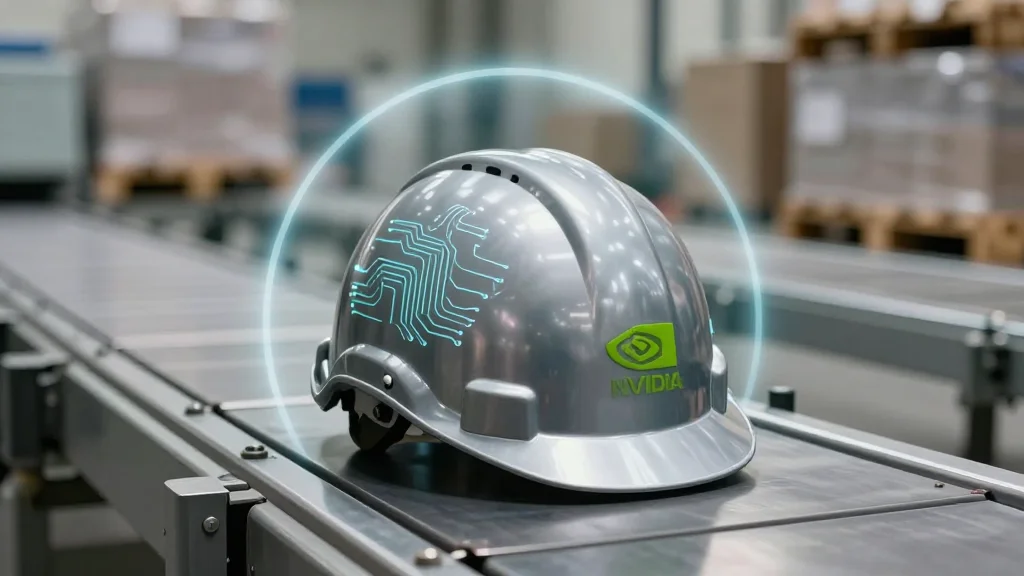
NVIDIA announced Halos for Robotics, a SaaS‑style safety platform that bundles AI compute, sensor integration and safety software into a single subscription service. The first customer, Agility, will embed Halos in its humanoid Digit robots deployed at Amazon, GXO and other logistics sites, giving developers a proven safety stack to speed time‑to‑value.
Why It Matters
Halos transforms robot safety from a bespoke engineering effort into a consumable SaaS product, lowering barriers to entry for manufacturers and accelerating adoption of autonomous robots in labor‑intensive industries. By leveraging its autonomous‑vehicle safety pedigree, NVIDIA can command premium pricing and lock customers into a recurring‑revenue model that scales with robot fleet size, creating a durable revenue moat.
For SaaS investors, Halos illustrates how deep‑tech firms can repurpose core IP into subscription services, diversifying revenue streams and improving predictability. The platform also highlights the convergence of AI compute, edge sensors and compliance software—a trend that will likely spawn a wave of vertical SaaS offerings across other physical‑AI domains such as drones, autonomous forklifts and smart factory equipment.
Key Points
- NVIDIA launched Halos for Robotics, a full‑stack safety SaaS platform for autonomous robots.
- Agility’s Digit robot is the first adopter, deployed for Amazon, GXO, Schaeffler and Toyota.
- Halos combines IGX Thor compute, Halos OS, sensor bridges and an ANSI‑accredited inspection lab.
- NVIDIA reported FY2026 revenue of $215.94 B (+65.5% YoY) and a market cap of $5.10 T.
- The platform introduces a subscription‑based revenue model that could drive expansion revenue as robot fleets grow.
Analysis
NVIDIA’s entry into the safety‑as‑a‑service space is a textbook example of a platform play that leverages existing IP to create a new, high‑margin SaaS business. Historically, robot manufacturers have built safety features in‑house or relied on fragmented third‑party solutions, leading to long integration cycles and regulatory uncertainty. By offering a unified, certified stack, NVIDIA not only accelerates time‑to‑market for its partners but also creates a sticky relationship that can be monetized through recurring fees and upsell opportunities such as additional safety modules or analytics dashboards.
From a market dynamics perspective, Halos could reshape competitive equations in both the AI chip and robotics arenas. Chipmakers that lack a safety layer will find it harder to win OEM contracts, while pure‑play robot firms may be forced to either adopt NVIDIA’s platform or invest heavily to develop comparable capabilities. This mirrors the way cloud providers bundled security services to become indispensable to enterprise customers. As safety compliance becomes a prerequisite for large‑scale deployments in regulated sectors like logistics and manufacturing, the platform’s certification pathways could become a de‑facto standard, further entrenching NVIDIA’s position.
Looking ahead, the success of Halos will hinge on ecosystem adoption and the ability to translate safety compliance into measurable ROI for end users. If NVIDIA can demonstrate that its platform reduces incident rates and accelerates deployment timelines, it will likely see strong net‑retention and expansion revenue, validating the SaaS model in a traditionally hardware‑centric industry. For investors, Halos adds a predictable, high‑growth revenue stream to NVIDIA’s portfolio, potentially smoothing the volatility associated with cyclical chip demand and reinforcing the company’s narrative as the AI infrastructure backbone for the next wave of physical AI applications.