
GM to Deploy SaaS‑Powered ‘Eyes‑Off’ Autonomy Across Pickups, SUVs by 2028
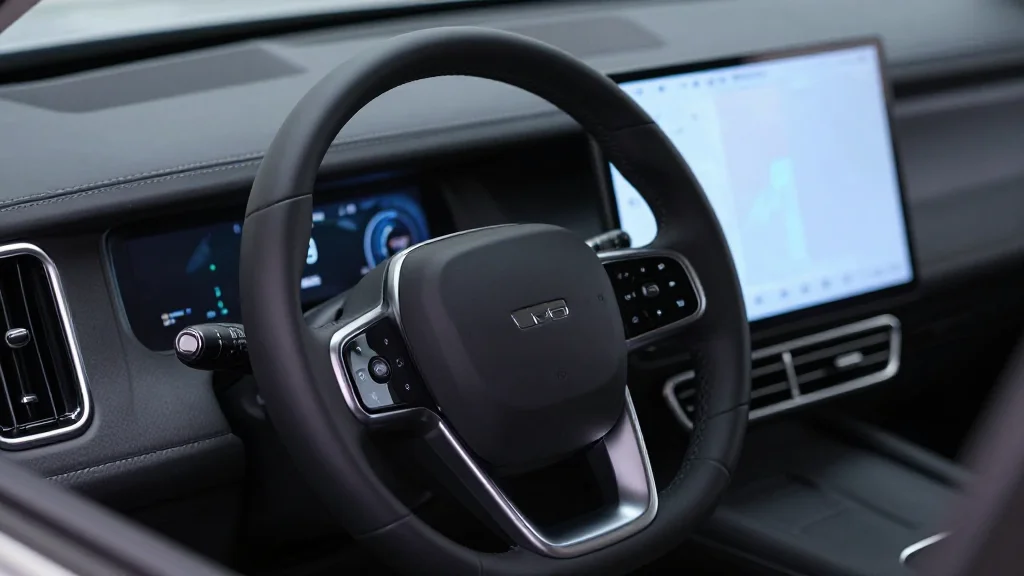
General Motors said it will extend its “eyes‑off” autonomous‑driving feature to pickup trucks, crossovers and large SUVs after a 2028 debut in the Cadillac Escalade IQ. The rollout relies on a centralized SaaS software platform and an AI‑driven OnStar assistant, which UBS projects could lift GM’s digital revenue to $9.6 billion by 2036.
Why It Matters
The expansion signals a shift from hardware‑centric automotive engineering to a software‑first, subscription‑based model. For SaaS operators, GM’s approach illustrates how a legacy manufacturer can repurpose cloud infrastructure, AI, and data analytics to create recurring revenue streams comparable to enterprise software businesses. It also raises the bar for competitors, who must now match GM’s ability to deliver over‑the‑air updates and monetize autonomous capabilities at scale.
For investors, the projected tripling of digital revenue highlights the financial upside of treating vehicle functions as SaaS products. The move could reshape valuation benchmarks in the auto sector, with software margins and ARR becoming as critical as traditional vehicle sales metrics.
Key Points
- GM will extend its “eyes‑off” autonomous driving to pickups, crossovers and large SUVs after a 2028 debut in the Cadillac Escalade IQ.
- The rollout relies on a centralized SaaS computing platform and the OnStar AI Assistant, slated for a 2027 launch in the Cadillac Lyriq.
- UBS projects GM’s digital revenue could rise from $3.2 B in 2024 to $9.6 B by 2036.
- Mary Barra emphasized the shift toward an “intelligent partner” vehicle, while Sterling Anderson detailed the phased expansion plan.
- Regulatory discussion of cyan lighting for autonomous mode could standardize public perception of “eyes‑off” driving.
Analysis
GM’s announcement marks a rare convergence of automotive scale and SaaS economics. Historically, car makers have struggled to monetize software beyond infotainment; GM’s unified platform changes that calculus by turning each vehicle into a subscription endpoint. The company’s ability to push updates across a heterogeneous fleet mirrors the model used by cloud providers, where recurring revenue is tied to feature adoption rather than one‑off hardware sales. This could compress the competitive advantage of pure‑play EV startups that rely on proprietary software stacks, forcing them to either license GM’s platform or accelerate their own SaaS capabilities.
From an operational standpoint, the shift to a SaaS core reduces time‑to‑market for new autonomous features. By decoupling software from physical redesigns, GM can iterate faster, test A/B variations in real‑world driving data, and monetize improvements on a per‑vehicle basis. The approach also aligns with the broader industry trend toward “mission mode” services, where vehicles act as autonomous delivery agents. If GM can successfully bundle these services into a subscription, it will create a new revenue moat that is harder for competitors to replicate without comparable data and cloud infrastructure.
Looking ahead, the success of GM’s SaaS rollout will hinge on three factors: regulatory acceptance of autonomous operation, consumer willingness to pay for recurring AI features, and the company’s ability to maintain high software reliability at scale. The cyan‑light proposal hints at a future where autonomous mode is a visible, regulated service, potentially unlocking broader market adoption. For SaaS investors, GM’s trajectory offers a template for how legacy hardware firms can reinvent themselves as software businesses, creating fresh valuation levers in a traditionally low‑margin industry.