
DeepSeek's DSpark Inference Engine Challenges Nvidia's Decode Rack for AI SaaS
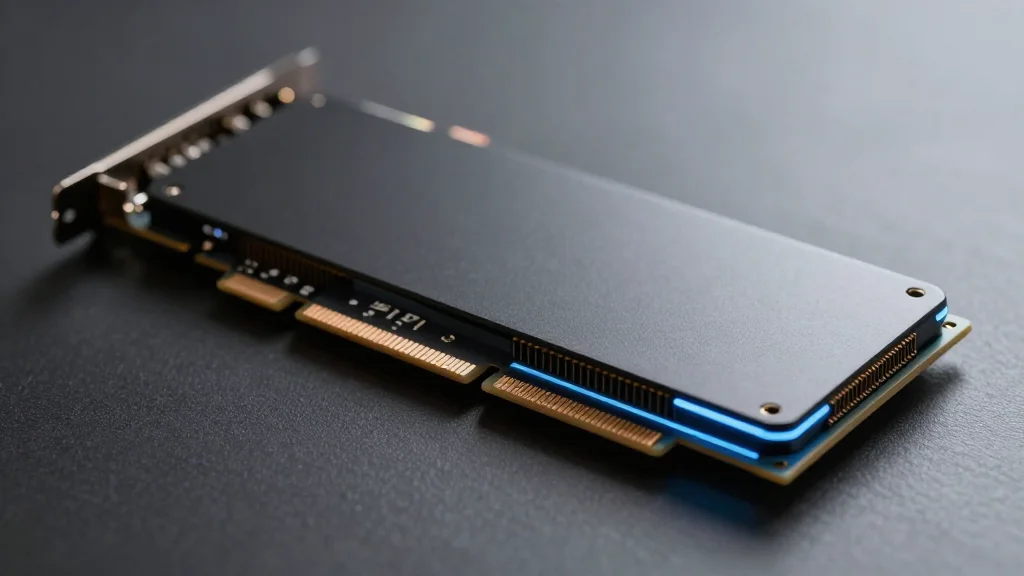
DeepSeek unveiled DSpark, a high‑performance open‑weight inference engine that accelerates AI SaaS workloads while lowering cost. The launch arrives as Nvidia rolls out its Groq 3 LPX decode rack, a hardware add‑on aimed at the same decode bottleneck, creating a head‑to‑head battle for AI SaaS providers.
Why It Matters
DSpark’s launch underscores a shift toward software‑driven performance gains in the AI inference market, a trend that directly impacts SaaS economics. By lowering the cost per token for large‑language‑model serving, AI SaaS companies can improve margins, expand usage tiers, and defend against price‑sensitive competition.
The parallel rollout of Nvidia’s Groq 3 LPX and cloud‑native decode solutions highlights a strategic crossroads: SaaS providers must decide between capital‑intensive hardware upgrades and agile software stacks. The outcome will shape the competitive moat of AI SaaS platforms, influencing everything from pricing models to go‑to‑market strategies.
Key Points
- DeepSeek released DSpark, an open‑weight inference engine that accelerates decode without new hardware.
- Nvidia reported $81.6 B total revenue, $75.2 B data‑center revenue, and 74.9 % GAAP gross margin in its record quarter.
- Groq 3 LPX features 256 LPUs, 500 MB SRAM per LPU, and 150 TB/s bandwidth—seven times Rubin GPU memory bandwidth.
- Nvidia claims LPX can achieve up to 35× higher inference throughput per megawatt for trillion‑parameter models.
- AWS and Cerebras announced a decode‑focused wafer‑scale engine partnership for Bedrock, launching H2 2026.
Analysis
The DSpark announcement signals that software optimization can still outpace pure hardware scaling in the AI inference arena. Historically, performance gains have been driven by GPU improvements, but the diminishing returns on Moore’s Law and the rising cost of specialized silicon have opened space for open‑weight, cache‑aware engines. DSpark’s ability to run on existing GPU fleets means SaaS operators can extract immediate value without the capital outlay required for Nvidia’s LPX, which may be a decisive factor for cost‑sensitive startups and mid‑market players.
Nvidia’s strategy reflects a classic hardware add‑on play: monetize a known bottleneck by selling a dedicated accelerator. The risk is twofold. First, the separate purchase decision adds friction, especially when customers have already committed to Nvidia GPUs for pre‑fill workloads. Second, the industry’s rapid convergence on a split architecture—evidenced by AWS’s Cerebras partnership—means cloud providers could internalize the decode function, reducing the addressable market for third‑party racks. If cloud services bundle decode acceleration into their managed offerings, SaaS firms may prefer those integrated solutions over a mixed‑vendor hardware stack.
Looking ahead, the competitive dynamics will likely hinge on execution speed and ecosystem support. DSpark’s open‑weight model could foster a community of contributors, accelerating feature development and compatibility with emerging LLMs. Nvidia, meanwhile, must demonstrate that the LPX’s claimed 35× throughput advantage translates into real‑world cost savings that outweigh its upfront expense. The battle between software‑first and hardware‑first approaches will shape the cost structure of AI SaaS, influencing pricing, unit economics, and ultimately, the speed at which AI‑driven products can scale.