
Axon Launches Body 5 Camera with 25× AI Power to Feed Public‑Safety SaaS Platforms
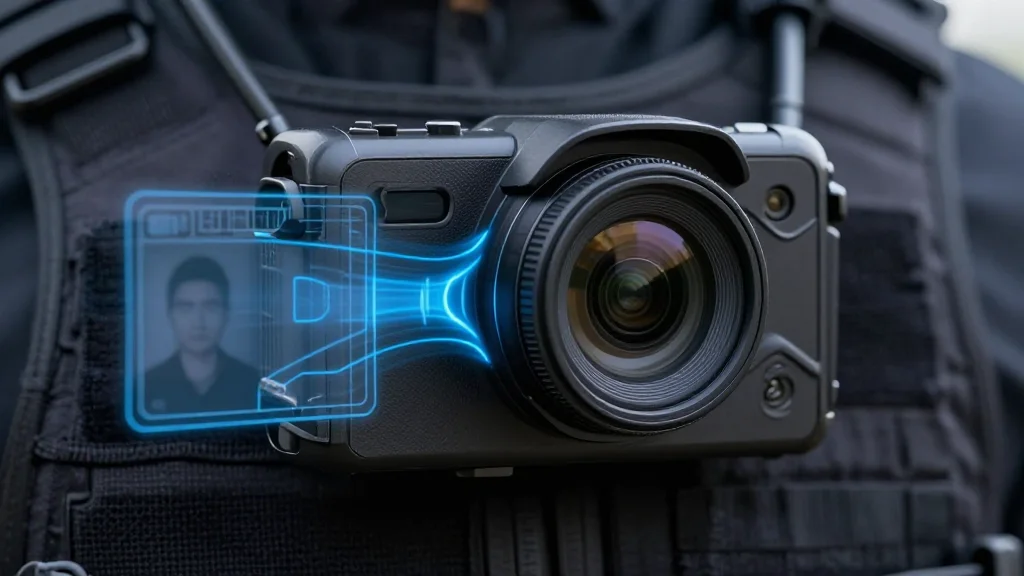
Axon announced the Body 5 camera, delivering 25‑times more on‑device AI processing than prior models and a Pro variant with a near‑focus lens for license scanning. The hardware upgrade is positioned as a richer data source for Axon’s cloud‑based public‑safety SaaS tools, promising faster, hands‑free information for officers.
Why It Matters
The Body 5 launch illustrates how edge AI can become a growth engine for SaaS businesses in regulated verticals. By embedding powerful AI directly in the camera, Axon not only improves officer safety but also creates a high‑frequency data pipeline that fuels its cloud analytics, driving higher net‑retention and opening new premium‑feature revenue streams. For SaaS operators, the case study highlights the competitive advantage of offering an integrated hardware‑software stack that can evolve via subscription, reducing churn and raising barriers to entry for pure‑play software competitors.
Moreover, the announcement signals that public‑safety agencies are ready to adopt AI‑native solutions at scale, a market that has historically lagged due to budget constraints and procurement cycles. Axon’s ability to bundle hardware upgrades with SaaS subscriptions could accelerate digital transformation across municipalities, prompting other vendors to pursue similar edge‑SaaS models in domains like emergency dispatch, traffic management and corrections.
Key Points
- Body 5 delivers 25× on‑device AI processing power versus prior Axon cameras
- Battery life extended by 20% to support full‑shift operation
- Body 5 Pro adds near‑focus lens for instant license scanning and extra storage
- New hardware is tightly integrated with Axon’s AI Era Plan SaaS suite
- Pilot rollouts begin Q4 2026; full launch expected Q2 2027, with premium pricing for Pro model
Analysis
Axon’s Body 5 is more than a hardware refresh; it’s a strategic play to cement the company’s SaaS moat in the public‑safety ecosystem. Historically, Axon’s revenue mix has been weighted toward hardware sales, which are subject to longer procurement cycles and lower margins. By shifting the value proposition toward AI‑driven services that run on the camera itself, Axon can capture higher‑margin subscription dollars and improve its gross margin profile. The 25× AI boost positions the device to run sophisticated models—such as real‑time facial recognition or behavior‑analysis algorithms—without relying on bandwidth‑intensive cloud inference, a critical advantage in rural or bandwidth‑constrained jurisdictions.
From a competitive standpoint, the move forces rivals like Motorola Solutions and Panasonic to reconsider their own edge‑AI roadmaps. Those firms have traditionally focused on rugged hardware but have lagged in offering a unified SaaS platform. Axon’s integrated approach creates a data lock‑in: once agencies adopt Body 5 and connect to Axon’s AI Era Plan, switching costs rise because the accumulated AI models, historical evidence, and custom workflows reside in Axon’s cloud. This could translate into higher expansion revenue as agencies add new AI modules—translation, predictive policing, or automated report drafting—over the camera’s lifecycle.
Finally, the Body 5 underscores a broader industry trend where vertical SaaS providers are leveraging AI‑native edge devices to accelerate adoption. The public‑safety market, with its emphasis on transparency, accountability and officer safety, is uniquely suited to high‑frequency data capture. As municipalities allocate budgets for modernizing police tech, vendors that bundle hardware upgrades with scalable SaaS subscriptions will likely capture the lion’s share of the $10‑plus billion public‑safety technology spend projected through 2030. Axon’s announcement thus sets a benchmark for how edge AI can be monetized through recurring SaaS revenue, reshaping the economics of an industry that has long been hardware‑centric.