
Syria's startup ecosystem reaches milestone as Labby raises $10 million
LabbyCompany
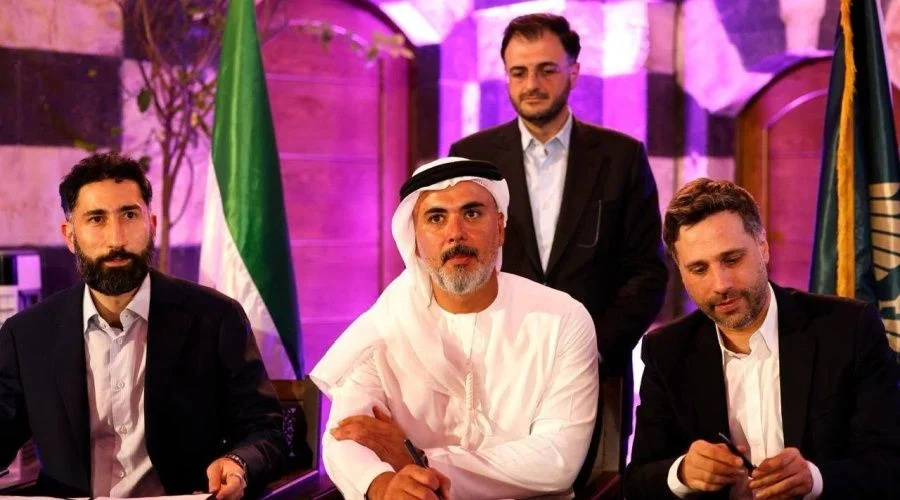
Syrian super‑app Labby secured $10 million from a UAE‑Saudi investor consortium on July 22, 2026, marking the first direct foreign investment in a Syrian technology startup and providing capital to accelerate product development and market expansion.
Deal Terms
Labby, a Syrian‑based super app founded in 2024 by Mohammad Fawaz, announced a $10 million venture round on July 22, 2026. The capital came from a consortium of investors based in the United Arab Emirates and Saudi Arabia. The round’s structure and valuation multiples were not disclosed. The funding is earmarked for product development, expansion of digital services, strengthening of the technology stack, and broader market rollout across Syria.
Market Context
Labby aggregates ride‑hailing, food delivery, e‑commerce, digital payments and other on‑demand services into a single platform, positioning itself as a SaaS‑enabled marketplace for consumer transactions. The super‑app model, popular in Southeast Asia and the Middle East, relies on a modular architecture that can be scaled across verticals, a hallmark of modern SaaS businesses. By consolidating multiple services, Labby aims to increase user stickiness and generate cross‑sell revenue, a strategy that aligns with high‑growth SaaS operators seeking net‑revenue‑retention above 120%.
The $10 million injection arrives as Syria’s nascent startup ecosystem begins to attract external capital. Prior to this round, Syrian tech firms primarily relied on domestic funding or diaspora angel investors. The involvement of UAE and Saudi capital signals growing confidence in the country’s digital transformation agenda and suggests that regional investors are now willing to allocate resources to markets previously considered high‑risk.
Labby plans to use the new capital to accelerate its technology roadmap, broaden its service catalog, and recruit talent to support rapid scaling. The company also intends to deepen its digital payments infrastructure, a critical component for building a data‑driven SaaS platform that can monetize transaction volume and drive recurring revenue streams.
The transaction underscores a broader trend of cross‑border venture activity targeting emerging‑market SaaS platforms that can serve under‑penetrated consumer bases. While details on the round’s equity split remain undisclosed, the financing provides Labby with a runway to pursue aggressive growth targets and to position itself against regional super‑app incumbents expanding into the Syrian market.
Why It Matters
For Labby, the $10 million round supplies the financial muscle needed to upgrade its platform architecture, expand its service ecosystem, and accelerate user acquisition. The capital will also enable the company to compete more effectively with regional super‑app players that are eyeing the Syrian market, potentially shifting the competitive balance toward a domestically built solution with localized knowledge.
Regional investors gain a foothold in Syria’s digital economy, creating a pipeline for future follow‑on investments. Their presence may also catalyze partnerships with local banks and telecom operators, giving Labby access to distribution channels that could accelerate its go‑to‑market strategy and improve its gross margin profile relative to peers that rely on third‑party integrations.
Key Points
- Labby raised $10 million from a UAE‑Saudi investor consortium on July 22, 2026
- The round is the first direct foreign investment in a Syrian technology startup
- Funding will be used for product development, service expansion, infrastructure upgrades, and market rollout
- Labby’s super‑app aggregates ride‑hailing, food delivery, e‑commerce, and digital payments under a SaaS‑enabled platform
- The deal signals growing regional investor confidence in Syria’s emerging startup ecosystem
Analysis
The undisclosed valuation of Labby’s $10 million round limits precise multiple analysis, but the financing aligns with a broader pattern of investors applying SaaS‑style growth capital to emerging‑market platforms. In mature markets, comparable super‑app startups have commanded valuations ranging from 5x to 12x annual recurring revenue (ARR) once they achieve scale. Labby’s focus on modular, API‑driven services suggests it will target a similar ARR trajectory, leveraging cross‑sell opportunities to boost net‑revenue‑retention.
For operators, the infusion underscores the importance of building a scalable technology stack that can support rapid addition of verticals—a hallmark of SaaS architecture. Investors will watch Labby’s ability to convert transaction volume into recurring subscription revenue, a metric that drives valuation in the SaaS sector. The entry of Gulf capital into Syria also highlights a shift in risk appetite, indicating that investors are now willing to back high‑growth SaaS models in markets with nascent digital adoption, provided the teams can demonstrate strong product‑market fit and defensible user data.
Looking ahead, the deal may encourage other regional funds to scout for SaaS‑oriented startups in conflict‑affected economies, expanding the pipeline of cross‑border capital. For SaaS investors, Labby offers a case study in how a super‑app can serve as a multi‑vertical SaaS platform, turning fragmented consumer services into a unified revenue engine. The success of this round could accelerate the emergence of similar models across the Middle East and North Africa, where digital payments and on‑demand services remain under‑penetrated.