
Parts Town Acquires 86 Repairs to Connect Restaurant Parts, Service and Maintenance Data
Parts TownAcquirer
86 RepairsTarget
Parts Town has acquired 86 Repairs, a Chicago‑based repair‑management SaaS platform for foodservice operators, to combine its OEM parts distribution with a software solution that streamlines equipment service and data.
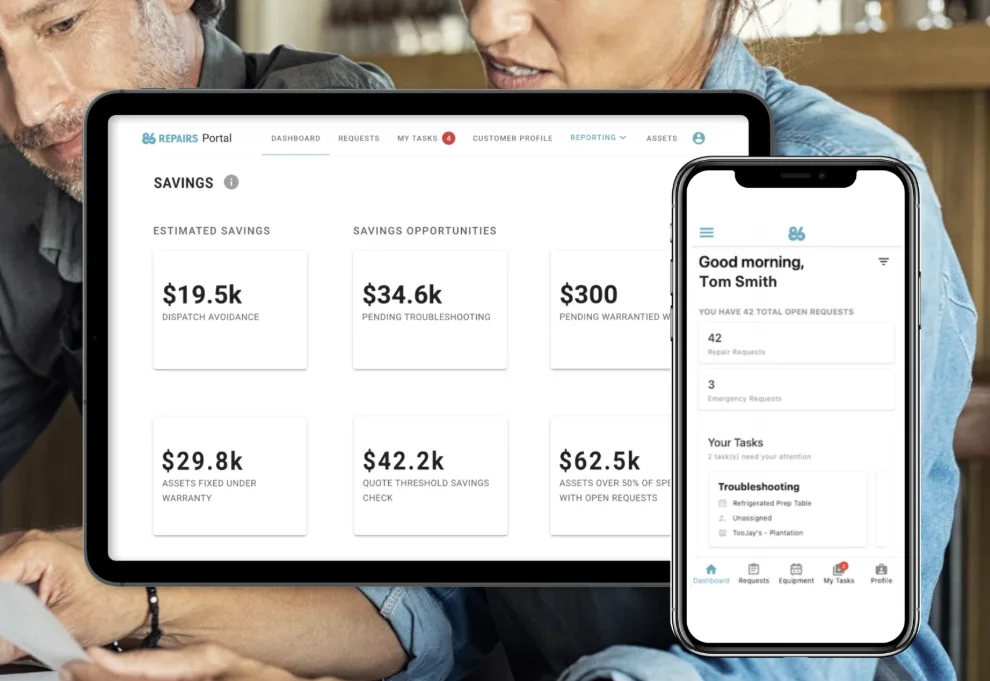
Parts Town announced the acquisition of 86 Repairs on June 30, 2026, bringing together two Chicago‑area businesses that address the often‑overlooked equipment repair workflow in restaurants. Financial terms were not disclosed. The deal merges Parts Town’s extensive catalog of genuine OEM parts with 86 Repairs’ cloud‑based platform that lets operators submit service tickets, coordinate vendors, track spend and analyze equipment performance.
Deal Terms
The transaction is an outright acquisition; no earn‑out or contingent consideration was mentioned. Both companies have operated in the same regional ecosystem for years, which should ease integration. Parts Town, founded in 1987, has grown into one of the largest distributors of foodservice, HVAC and appliance parts, supported by a robust e‑commerce operation. 86 Repairs, launched in 2018, offers a SaaS solution that digitizes the repair request, parts identification, technician scheduling and invoicing process for multi‑unit restaurant groups.
Strategic Rationale
President Clint Holder said the combined entity will “invest further in technology and AI‑driven capabilities that reduce friction, improve visibility and help customers get equipment running faster.” By linking parts inventory directly to the repair workflow, the new platform can cut the time between fault detection and part fulfillment, reducing equipment downtime that directly hits sales, labor costs and food quality. The data generated—from failure rates to parts usage—creates a feedback loop that can inform preventative maintenance schedules and capital‑planning decisions.
For restaurant operators, the integration promises a single point of contact for both parts ordering and service management, eliminating the need to juggle separate systems or phone calls. For service providers, access to real‑time parts availability can improve first‑time‑fix rates and reduce repeat visits. The acquisition also positions Parts Town to move up the value chain from a pure distributor to a full‑stack equipment‑service provider, leveraging SaaS data to deepen relationships with OEM manufacturers.
Why It Matters
The acquisition gives Parts Town a direct foothold in the software layer of equipment maintenance, turning a transactional parts business into a recurring‑revenue SaaS play. Competitors such as ServiceChannel, UpKeep and MaintainX will now face a hybrid offering that couples parts supply with work‑order management, potentially raising the bar for integration and data depth. For 86 Repairs, the partnership provides immediate scale in parts sourcing and a broader customer base, accelerating its path to higher net revenue retention.
Direct rivals in the restaurant‑tech space will need to reassess their go‑to‑market strategies. Platforms that focus solely on work‑order routing may lose market share unless they add parts‑sourcing capabilities or forge similar distribution alliances. Service providers that rely on fragmented vendor networks could see pressure to adopt more data‑rich, integrated solutions to stay competitive.
Key Points
- Parts Town acquired 86 Repairs on June 30, 2026; financial terms were not disclosed.
- The deal combines Parts Town’s OEM parts distribution with 86 Repairs’ repair‑management SaaS platform.
- Integration aims to reduce equipment downtime and provide richer data on parts usage and equipment health.
- Both companies are Chicago‑based and have collaborated previously, easing integration risk.
- The combined offering positions Parts Town to compete with integrated facilities‑management SaaS providers.
Analysis
While the purchase price remains private, the transaction illustrates a growing appetite among vertical SaaS players to bundle distribution assets with software. For investors, the move signals that data‑rich, end‑to‑end solutions can command premium valuations even in traditionally low‑margin distribution segments. By owning both the parts inventory and the repair workflow, Parts Town can generate cross‑sell opportunities that lift average contract value and improve gross margin through higher‑margin SaaS subscriptions.
The restaurant‑technology market is consolidating around integrated operating systems that span POS, labor, inventory and now equipment maintenance. The acquisition aligns with a broader trend of “platformization,” where a single vendor offers a unified stack to reduce friction and increase stickiness. For SaaS operators, the deal underscores the value of acquiring domain‑specific data sets—here, real‑time equipment failure and parts demand—that can be leveraged for predictive analytics and AI‑driven recommendations.
From a valuation perspective, the lack of disclosed multiples suggests the deal may have been priced on strategic synergies rather than pure revenue multiples. Private‑equity and growth investors will likely watch for the combined entity’s ability to monetize the data pipeline and achieve higher net revenue retention, metrics that drive higher multiples in the vertical SaaS space. If Parts Town can demonstrate measurable reductions in equipment downtime and associated cost savings for its restaurant customers, the model could become a template for other distribution‑centric verticals seeking to transition into recurring‑revenue SaaS businesses.