
Kestrel Labs raises $2.15M pre‑seed round to launch AI‑powered Revit code compliance platform
New Stack VenturesCompany
FirstMile VenturesInvestor
Denver VenturesInvestor
Avesta FundInvestor
Kestrel Labs closed a $2.15 million pre‑seed round on June 18, 2026, with New Stack Ventures, FirstMile Ventures, Denver Ventures and Avesta Fund. The capital will fund the launch of its AI‑powered Revit code‑compliance platform, a vertical SaaS solution aimed at architecture firms. The round underscores growing investor interest in AI‑enhanced construction‑tech tools that embed regulatory checks into design workflows.
Kestrel Labs secured $2.15 million in pre‑seed financing from New Stack Ventures, FirstMile Ventures, Denver Ventures and Avesta Fund, announcing the round at the American Institute of Architects Conference on Architecture and Design 2026. The funding will be used to commercialize a Revit‑integrated compliance platform that leverages artificial intelligence to flag jurisdiction‑specific code violations in real time.
Market Opportunity
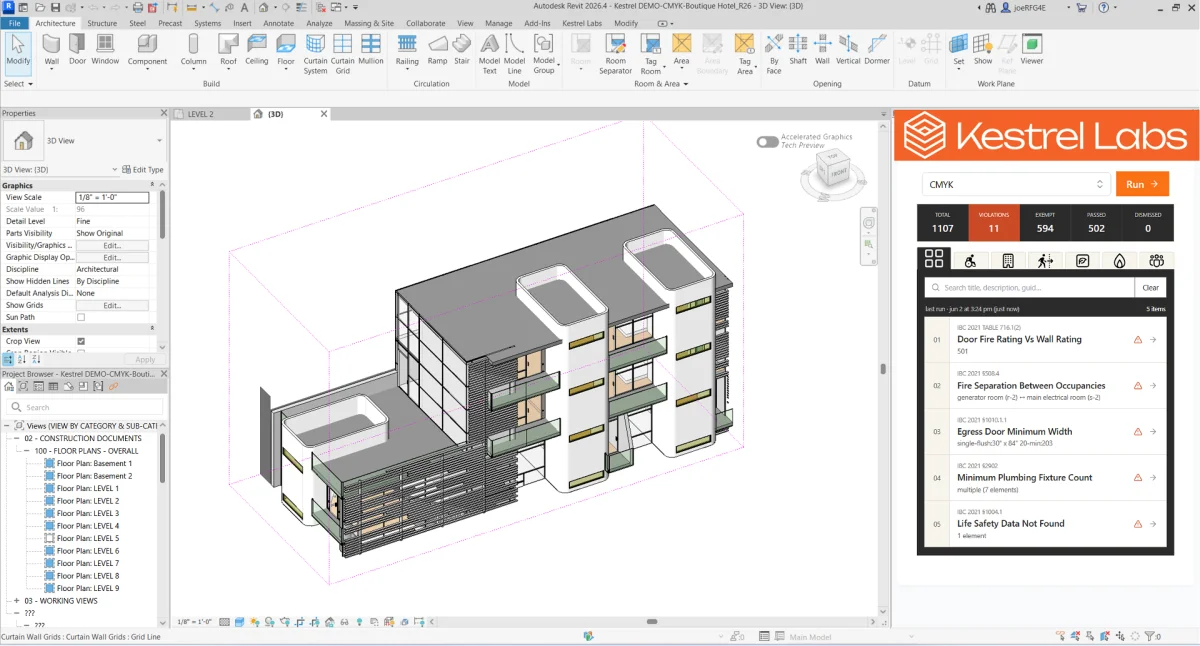
The Kestrel Platform tackles a friction point in the building‑information‑modeling (BIM) workflow: the gap between design intent and ever‑changing code requirements. Its three‑module suite—Compliance Analysis, Compliance Chat, and a web‑based Portal—delivers instant, element‑level code checks, an AI‑driven Q&A assistant, and a dashboard for non‑BIM stakeholders. By embedding these capabilities directly inside Autodesk Revit, Kestrel reduces the need for separate code‑review cycles, a pain point amplified as senior architects retire and junior staff inherit complex regulatory knowledge.
Investor Perspective
New Stack Ventures and its co‑investors see the deal as a classic vertical‑SaaS play, where deep domain expertise can command premium pricing and high net‑revenue‑retention (NRR) once the product reaches product‑market fit. The partnership with the International Code Council supplies a vetted code data set, mitigating a common data‑quality risk in construction‑tech AI. While the round’s valuation and ARR multiples were not disclosed, the $2.15 million size aligns with typical pre‑seed checks for AI‑enabled niche SaaS, suggesting investors expect a rapid go‑to‑market sprint and early expansion revenue from architecture firms seeking to future‑proof their compliance processes.
The launch positions Kestrel at the intersection of AI, SaaS, and the construction vertical, a space where incumbents like Autodesk are expanding APIs but have not yet built native code‑compliance intelligence. If Kestrel can demonstrate consistent reduction in plan‑review rework, it could achieve a high gross margin profile typical of SaaS—often 70‑80%—while unlocking upsell opportunities through additional jurisdiction packs and enterprise dashboards. Early traction will likely be measured by pilot deployments, user adoption rates within firms, and the speed at which the AI model can ingest new code updates.
For operators, the funding validates a GTM motion that blends direct sales to mid‑size architecture firms with channel partnerships through BIM consultants. For investors, the round signals confidence that AI can be layered onto established design tools to create defensible, high‑margin vertical SaaS businesses. The next 12‑18 months will reveal whether Kestrel can translate its technical demo into recurring revenue and set a benchmark for AI‑driven compliance solutions in the built environment.
Why It Matters
The financing gives Kestrel Labs the runway to move from prototype to a commercial SaaS offering that could become a de‑facto compliance layer for Revit users. By automating code checks, the platform promises to shrink design‑review cycles, lower rework costs, and improve NRR for architecture firms—key levers for SaaS profitability.
For the broader SaaS market, the round highlights investor appetite for vertical solutions that combine AI with entrenched enterprise workflows. If Kestrel succeeds, it could spur a wave of niche AI‑SaaS tools targeting other regulated design domains, reinforcing the trend toward specialized, high‑margin cloud products that lock in customers through mission‑critical compliance functionality.
Key Points
- Kestrel Labs raised $2.15 million in a pre‑seed round led by New Stack Ventures, FirstMile Ventures, Denver Ventures and Avesta Fund.
- The capital will fund the launch of an AI‑powered compliance platform that runs inside Autodesk Revit.
- The platform offers three modules: instant compliance analysis, an AI chat assistant, and a web dashboard for non‑BIM users.
- Kestrel’s data is sourced from an agreement with the International Code Council, ensuring jurisdiction‑specific code coverage.
- The announcement was made at the AIA Conference on Architecture and Design 2026, signaling early market validation among architects.
Analysis
Kestrel Labs’ $2.15 million pre‑seed round underscores a growing convergence of AI, SaaS and construction technology. By embedding code‑compliance checks directly into Autodesk Revit, Kestrel creates a vertical SaaS product that addresses a clear pain point: the disconnect between design models and ever‑changing building codes. The platform’s three‑pronged approach—real‑time analysis, an AI chat assistant, and a browser‑based dashboard—offers architecture firms a way to reduce plan‑review rework and accelerate project timelines. Investors such as New Stack Ventures see the deal as a high‑margin opportunity; vertical SaaS businesses that lock in mission‑critical workflows often achieve gross margins above 70% and strong net‑revenue‑retention. While valuation multiples were not disclosed, the pre‑seed size aligns with typical early‑stage AI‑enabled niche SaaS funding, suggesting expectations of rapid product‑market fit and early expansion revenue. If Kestrel can scale its AI models to cover new jurisdictions quickly, it could set a benchmark for AI‑driven compliance tools across regulated design sectors, prompting incumbents and new entrants to pursue similar integrations. For operators, the round validates a GTM strategy that blends direct sales to mid‑size architecture firms with channel partnerships through BIM consultants, while investors gain exposure to a defensible, high‑margin niche that could generate outsized returns as the construction industry digitizes further.