
Enverus acquires TGS well log business in $100 million deal
EnverusAcquirer
 TGSTarget
Enverus has completed the acquisition of TGS' North American well data products business for $115 million, paying $100 million at closing with a $15 million earnout, expanding its energy intelligence platform and allowing TGS to focus on offshore geophysical services.
Enverus has completed the acquisition of TGS' North American well data products business for $115 million, paying $100 million at closing and an additional $15 million earnout tied to performance milestones. The deal adds one of the industry's largest commercial well‑log libraries to Enverus' energy intelligence platform and frees TGS to sharpen its offshore geophysical focus.
Deal Terms
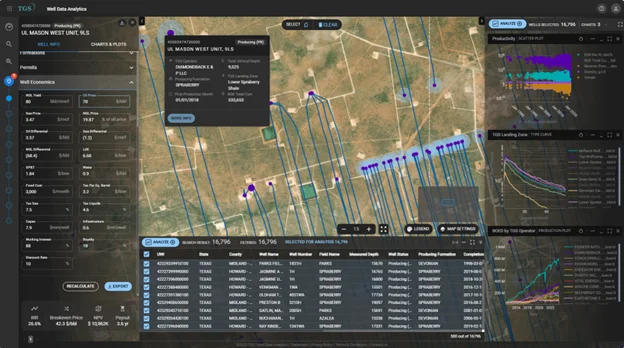
The transaction, announced on July 9, 2026, transfers the A2D‑operated well‑log unit—comprising more than 8 million depth‑calibrated raster logs, 1.9 million digital LAS files, over 2 million interpreted formation tops and 5 million proprietary logs—into Enverus' portfolio. The unit generated roughly $27 million in revenue in 2025, representing about 2.9 % of TGS' multi‑client revenue. Enverus will pay $100 million at closing, with a contingent $15 million earnout based on agreed milestones.
Strategic Rationale
Enverus' CEO Manuj Nikhanj emphasized that connecting energy data across the value chain unlocks higher‑order analytics and AI workflows. By integrating the newly acquired logs with its existing production, drilling, land, ownership, cost and economic datasets, Enverus aims to reduce data‑preparation friction for customers and enable more sophisticated subsurface‑to‑surface insights. For TGS, the divestiture aligns with its recent portfolio realignment following acquisitions of PGS, Magseis and ION Geophysical, allowing the company to concentrate capital on offshore seismic acquisition and imaging while using proceeds to reduce debt and fund shareholder returns.
The acquisition follows Enverus' earlier purchase of PDS Energy Information's exchange assets, underscoring a broader strategy of building a unified, AI‑ready data platform for the energy sector. Industry observers note that the deal reflects a growing appetite among energy‑focused SaaS providers to acquire high‑quality, vertically integrated data assets that can be monetized through subscription‑based analytics and predictive modeling services.
Overall, the transaction positions Enverus as a more comprehensive data hub for upstream operators, while TGS narrows its scope to the higher‑margin offshore geophysical market.
Why It Matters
For Enverus, the addition of TGS' well‑log library deepens its data moat and creates cross‑selling opportunities across its existing customer base of operators, service firms, and investors. Competitors such as IHS Markit and Wood Mackenzie will now face a platform that can deliver end‑to‑end subsurface interpretation alongside production economics, potentially accelerating Enverus' market share gains in the upstream analytics space.
TGS, by shedding a non‑core asset, can redeploy capital toward offshore seismic services where it has built scale through recent acquisitions. The reduced debt load and clearer strategic focus may improve its balance sheet flexibility and enable faster investment in next‑generation OBN and imaging technologies, sharpening its competitive edge against offshore specialists like PGS and CGG.
Key Points
- Enverus paid $100 million at closing plus a $15 million earnout, for a total deal value of $115 million
- The acquired business generated about $27 million in 2025 revenue, roughly 2.9 % of TGS' multi‑client revenue
- Enverus adds over 8 million raster logs, 1.9 million LAS files, 2 million formation tops and 5 million proprietary logs to its platform
- The transaction expands Enverus' data offering to support AI‑driven analytics across production, drilling, land and cost datasets
- TGS will retain an internal license to the well‑log library while using proceeds to reduce debt and focus on offshore geophysical services
Analysis
The $115 million purchase values TGS' well‑log unit at roughly 4.3 times its 2025 revenue, a multiple that reflects the premium placed on high‑quality subsurface data in the energy SaaS market. As operators increasingly rely on AI‑enabled workflows to optimize drilling and production decisions, platforms that can fuse raw logs with economic metrics command higher valuations. Enverus' move signals a broader consolidation trend where data‑centric SaaS firms acquire niche vertical assets to build end‑to‑end solutions, reducing the need for customers to stitch together disparate datasets. For investors, the deal illustrates that growth‑stage energy SaaS companies can achieve mid‑single‑digit revenue multiples when the acquisition adds clear network effects and expands the addressable market. The transaction also underscores the importance of earnout structures, aligning seller incentives with post‑close performance—a model that may become more common as buyers seek to mitigate integration risk while still capturing upside from accelerated data adoption. Overall, the deal reinforces the view that deep, integrated data assets are becoming the cornerstone of competitive advantage in the upstream SaaS segment, and that capital will continue to flow toward platforms that can monetize those assets through subscription and usage‑based pricing.