
Coval closes $28M Series A led by Norwest
CovalCompany
NorwestInvestor
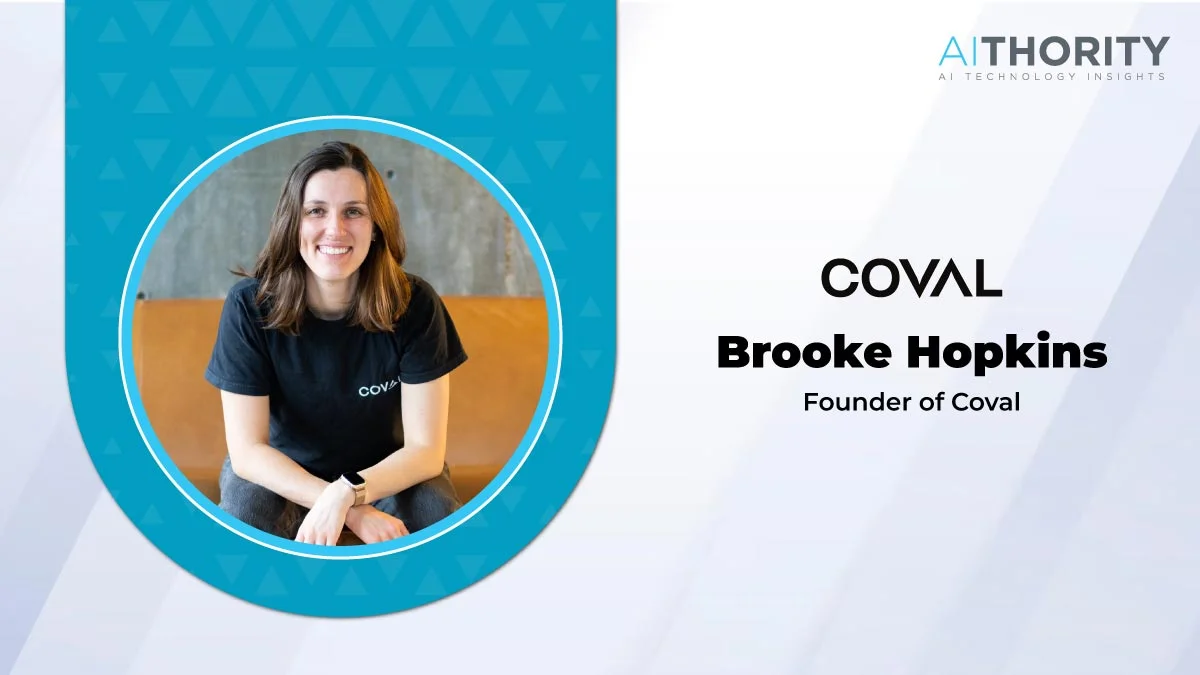
Coval, the voice‑AI evaluation platform founded by former Waymo executive Brooke Hopkins, announced a $28 million Series A on August 5, 2026, with Norwest as the lead investor. The capital is earmarked for scaling the company’s infrastructure and expanding its services across regulated enterprise verticals, positioning Coval as a critical trust layer for production voice agents.
Coval closed a $28 million Series A funding round on August 5, 2026, led by Norwest. The round provides the runway to scale its evaluation infrastructure and broaden its go‑to‑market footprint in highly regulated sectors such as financial services, healthcare and insurance.
Deal Terms
The Series A was the first disclosed external capital for Coval since its 2024 launch. Norwest is the sole named investor; other participants were not disclosed. The company will allocate the proceeds to engineering hires, sales expansion, and partnership development aimed at enterprise customers that require rigorous compliance and performance monitoring for voice AI agents.
Market Context
Voice‑AI is moving from experimental pilots to core customer‑facing channels, yet most enterprises lack a systematic way to measure agent quality at scale. Coval’s platform addresses this gap by embedding evaluation across six layers—telephony, speech‑to‑text, large language models, text‑to‑speech, orchestration and evaluation—mirroring safety‑critical testing practices from autonomous driving. Founder Brooke Hopkins draws on her Waymo background, arguing that without robust evals, enterprises risk deploying brittle agents that can’t adapt to long‑tail conversational scenarios.
The company already counts Fortune‑500 firms in regulated industries among its early adopters. By formalizing evaluation as a foundational component rather than an afterthought, Coval aims to become the de‑facto compliance and reliability layer for voice agents, a niche that is still largely unserved by traditional SaaS monitoring tools.
Coval’s growth trajectory reflects a broader shift in enterprise AI spend toward infrastructure that guarantees trust, auditability and regulatory adherence. The Series A positions the company to capture a larger share of the emerging voice‑AI infrastructure market, which analysts project to expand at double‑digit CAGR through 2030.
Why It Matters
For Coval, the infusion of $28 million accelerates its ability to lock in enterprise contracts before competitors can replicate a comparable evaluation stack. By scaling engineering resources, Coval can deepen its integrations with existing telephony and LLM providers, creating higher switching costs for customers that have built compliance workflows around its platform. This puts pressure on rivals that focus solely on transcription or text‑to‑speech, forcing them to either partner with an evaluation specialist or develop costly in‑house solutions.
From a competitive standpoint, the round signals that regulated verticals are willing to pay a premium for a trust layer that can demonstrably meet compliance mandates. Companies such as Observe.AI and Deepgram, which offer speech analytics, may need to broaden their roadmaps to include systematic evaluation capabilities or risk losing enterprise mindshare to Coval’s more holistic approach.
Key Points
- Coval closed a $28 million Series A on August 5, 2026, led by Norwest
- Norwest is the lead and only disclosed investor in the round
- Funding will be used to scale infrastructure and expand services for regulated enterprises
- Coval’s platform evaluates voice‑AI across six layers, from telephony to evaluation
- Founder Brooke Hopkins previously led evaluation infrastructure at Waymo, applying self‑driving safety principles to voice AI
Analysis
The $28 million Series A places Coval in the upper tier of early‑stage voice‑AI infrastructure plays, where valuations typically range between 8‑12 times projected ARR for SaaS companies with strong regulatory moats. While the exact multiple was not disclosed, the size of the round suggests investors see a clear path to multi‑digit ARR as enterprises adopt voice agents at scale. The broader AI market is increasingly emphasizing trust, auditability and compliance—attributes that are hard to retrofit after a product ships. Coval’s focus on systematic evaluation gives it a defensible position in a market projected to grow at double‑digit rates through 2030, driven by the shift from screen‑based to conversational interfaces. For operators, the raise underscores the importance of building a robust evaluation layer early, as it can become a key differentiator for upsell and expansion revenue. Investors will likely watch Coval’s ability to convert its early Fortune‑500 pilots into recurring contracts, a metric that could set a benchmark for future voice‑AI infrastructure valuations.