
Asana completes acquisition of StackAI
AsanaAcquirer
StackAITarget
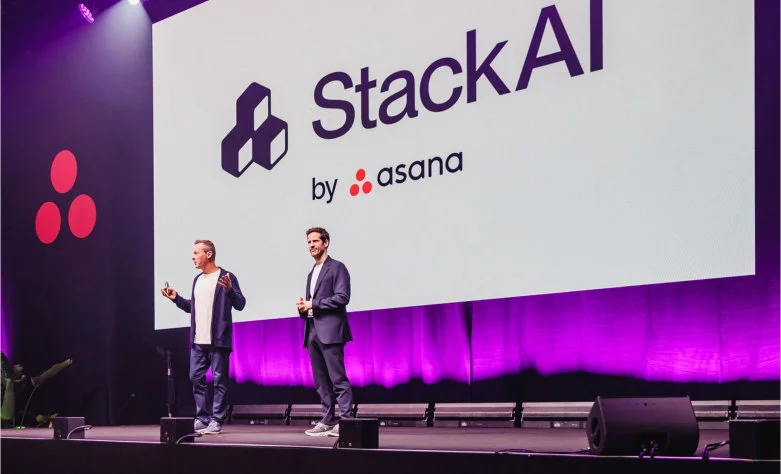
Asana completed its acquisition of AI workflow startup StackAI in May 2026, with terms undisclosed, adding visualization and multi‑system orchestration capabilities to its AI Studio platform.
Asana announced on July 31, 2026 that it has completed the acquisition of AI workflow startup StackAI, a deal whose financial terms were not disclosed. The transaction brings StackAI’s technology and its team of forward‑deployed engineers under the Asana umbrella, accelerating the company’s AI‑driven automation roadmap.
Deal Terms
The acquisition was finalized in May 2026 after a period of private negotiations. While the purchase price remains confidential, the deal signals Asana’s willingness to invest in specialized AI orchestration tools without resorting to a public financing round. StackAI will continue operating as a product unit within Asana, and its existing customer base—particularly firms in regulated sectors such as financial services, healthcare, and life sciences—will be transitioned to Asana’s broader platform.
Strategic Rationale
CEO Dan Rogers explained the core problem the deal addresses: “CEOs say to me, one of the biggest blockers is, I don't even have a list of my workflows. I don't have a visual representation of my workflows, and actually, my employees and teams that are working within workflows almost can't self‑realize what that workflow is.” By integrating StackAI’s visualization engine, Asana can now surface hidden, repeatable processes and present them in “human‑speak” language. Rogers added, “I think it's going to be a game‑changer when people start to play with Stack AI, because it actually brings workflows to the rest of us.”
Chief Product Officer Arnab Bose highlighted the breadth of StackAI’s integration catalog: “They have hundreds of integrations, and they've also been able to successfully prove their product‑market fit by selling into a lot of customers who are in regulated industries like financial services and healthcare and life sciences… So what it's bringing to Asana is this ability to build custom agents in a no‑code way and orchestrate complex actions across multiple third‑party systems.” The acquisition also delivers StackAI’s forward‑deployed engineering team, which Bose described as “quite important in not only doing proper discovery when a customer is buying Stack AI… and we stay with them through to adoption.”
The combined offering merges Asana’s work‑graph and goal‑oriented AI Studio with StackAI’s multi‑step orchestration, enabling customers to define outcomes rather than scripting each conditional step. This shortens time‑to‑value for complex automations, especially in heavily regulated environments where pre‑built, compliance‑ready templates are critical. The integration is expected to move capabilities that were on Asana’s roadmap by up to a year into production.
By uniting its end‑user experience with StackAI’s orchestration layer, Asana positions itself to compete more directly with other work‑management platforms that are bolstering AI features, such as Monday.com and ClickUp, while offering a deeper, outcome‑based automation stack for enterprise customers.
Why It Matters
For Asana, the acquisition eliminates a multi‑year development lag and gives immediate access to a mature integration ecosystem and a sales pipeline in regulated verticals. The forward‑deployed engineering team adds a consultative services layer that can boost net revenue retention by helping customers uncover high‑impact automation use cases and accelerate adoption. Competitors that rely solely on in‑house API connectors may find themselves trailing in the race to deliver no‑code, outcome‑driven agents.
StackAI gains scale, brand visibility, and cross‑sell opportunities across Asana’s existing enterprise base. Its customers benefit from a unified UI and the ability to embed workflow visualizations directly into the Asana work graph, reducing the friction of managing separate tools. The move also pressures other niche AI‑orchestration startups to consider strategic exits or partnerships to keep pace with platform‑level players expanding their AI capabilities.
Key Points
- Asana completed the acquisition of AI workflow startup StackAI in May 2026; deal terms were not disclosed
- StackAI adds a visualization engine that maps complex, multi‑step workflows and integrates with hundreds of enterprise applications
- The deal brings StackAI’s forward‑deployed engineering team to help customers discover and adopt agentic automation
- StackAI’s pre‑built, no‑code templates for regulated industries accelerate Asana’s AI Studio roadmap by up to a year
- Combining Asana’s work‑graph with StackAI’s orchestration enables outcome‑based, multi‑system automation for enterprise customers
Analysis
The undisclosed price of Asana’s StackAI purchase makes a precise valuation multiple impossible, but comparable AI‑orchestration deals have ranged between eight and twelve times annual recurring revenue. Assuming StackAI’s ARR sits in the $30‑$50 million band, the implied multiple would be in line with market norms for high‑growth, niche AI SaaS. The transaction underscores a broader shift: enterprise buyers are moving from point‑solution automations to outcome‑oriented agents that span multiple systems. For operators, the message is clear—building a robust integration catalog and offering consultative services are becoming essential levers for expanding expansion revenue and improving net revenue retention. Investors are likely to view bolt‑on acquisitions of specialized AI orchestration firms as a lower‑risk path to capture the $10 billion‑plus market that analysts forecast for AI‑driven workflow automation by 2030. Asana’s move may trigger a wave of similar deals as larger work‑management platforms seek to embed deep, no‑code orchestration capabilities and lock in enterprise contracts that demand compliance‑ready, multi‑system workflows.