The B2B SaaS Growth System: A 7-Step Engine for Predictable Customer Acquisition
Here we break down the 7-step B2B SaaS Growth System used to scale companies like Instantly and Clearstream, showing how to combine ABM list building, AI-personalized outbound, coordinated digital ads, and structured sales follow-up into one predictable customer acquisition engine.

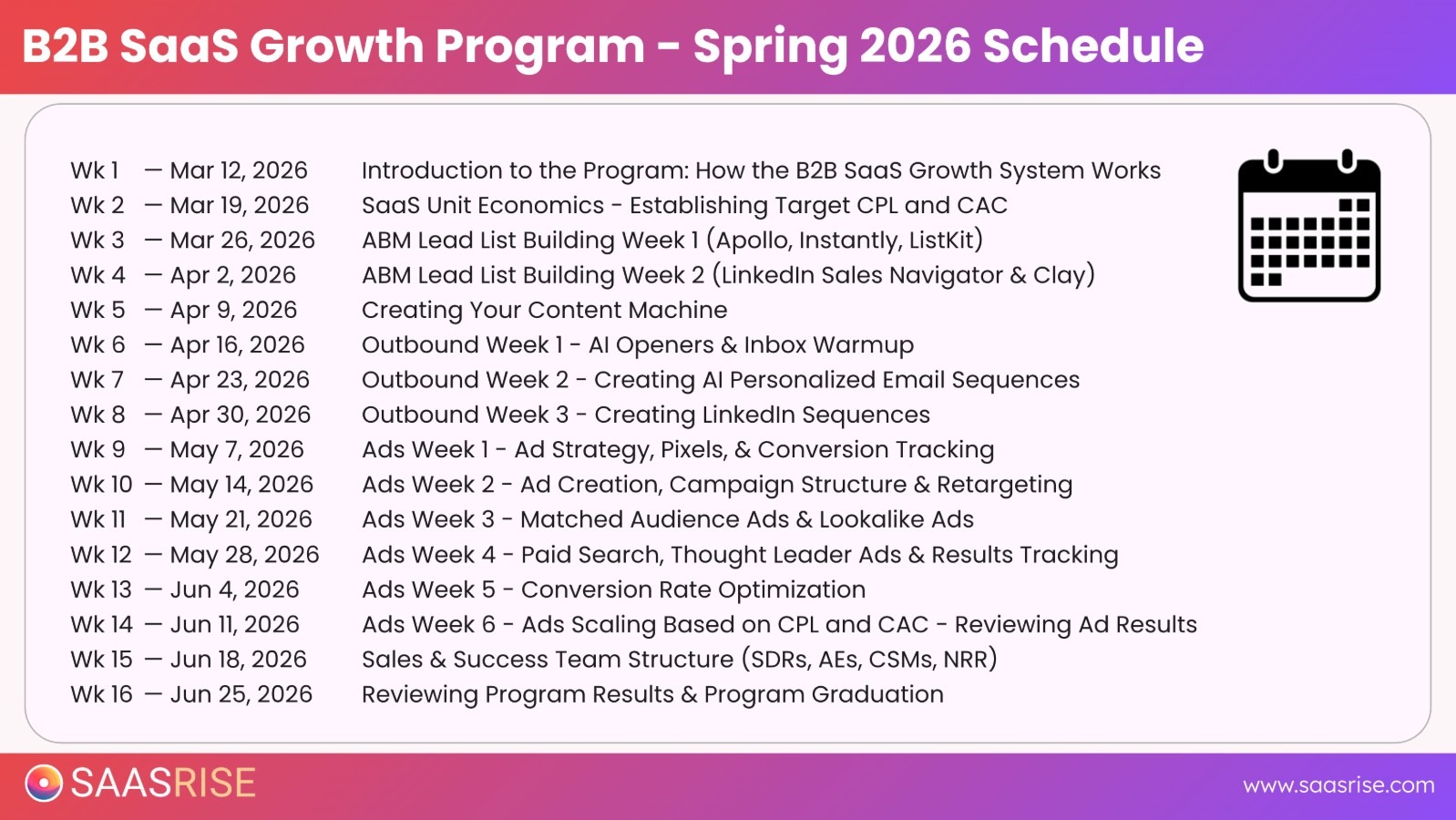
We will explain in detail how the upcoming Done-With-You SaaS Growth Program will work. If you are considering the program (or just want a good refresher on our scaling methods), be sure to be on the webinar!
To apply for the B2B SaaS Growth Program please visit: https://saasrise.com/growthprogram and see this updated program overview deck.
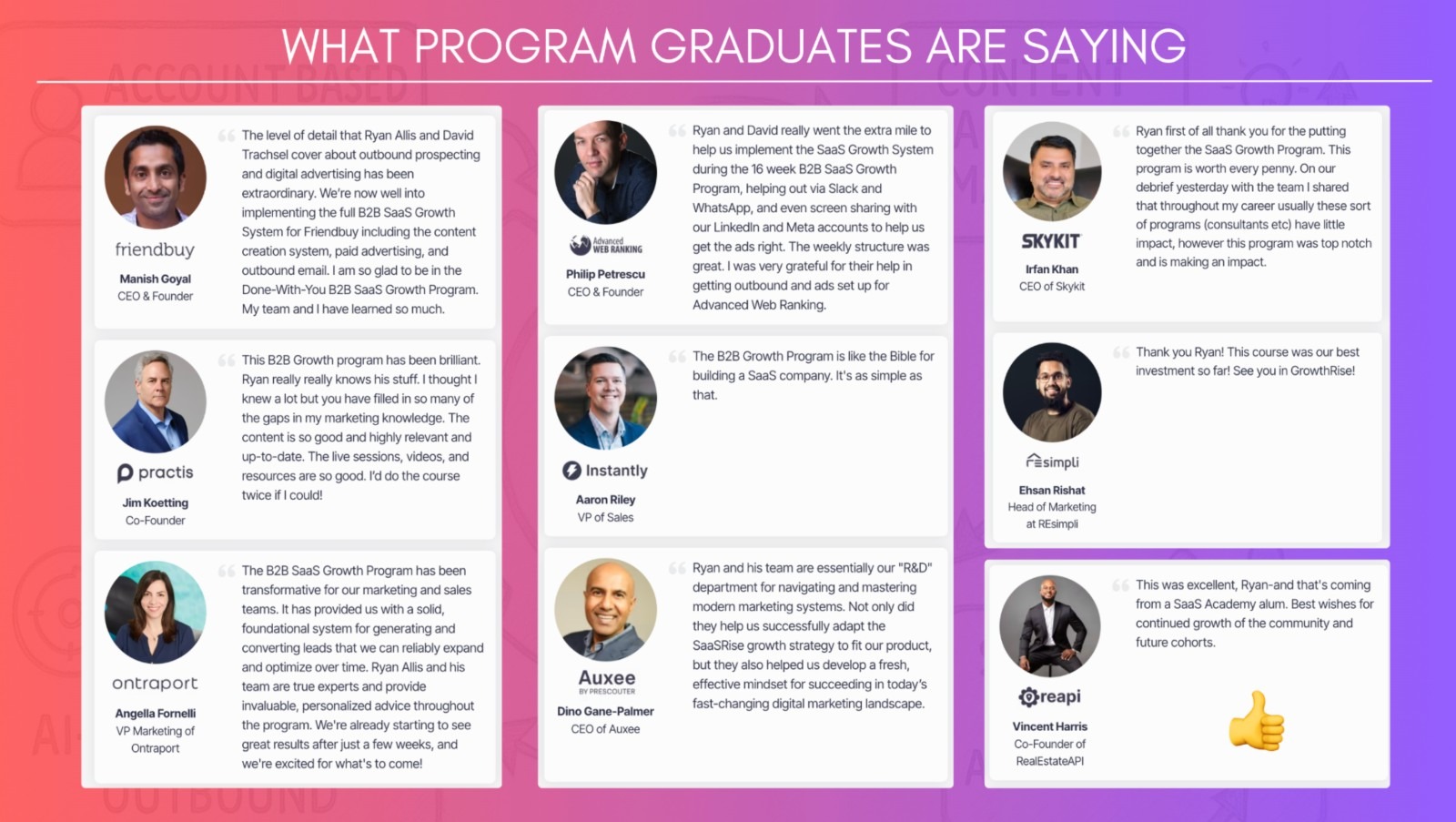
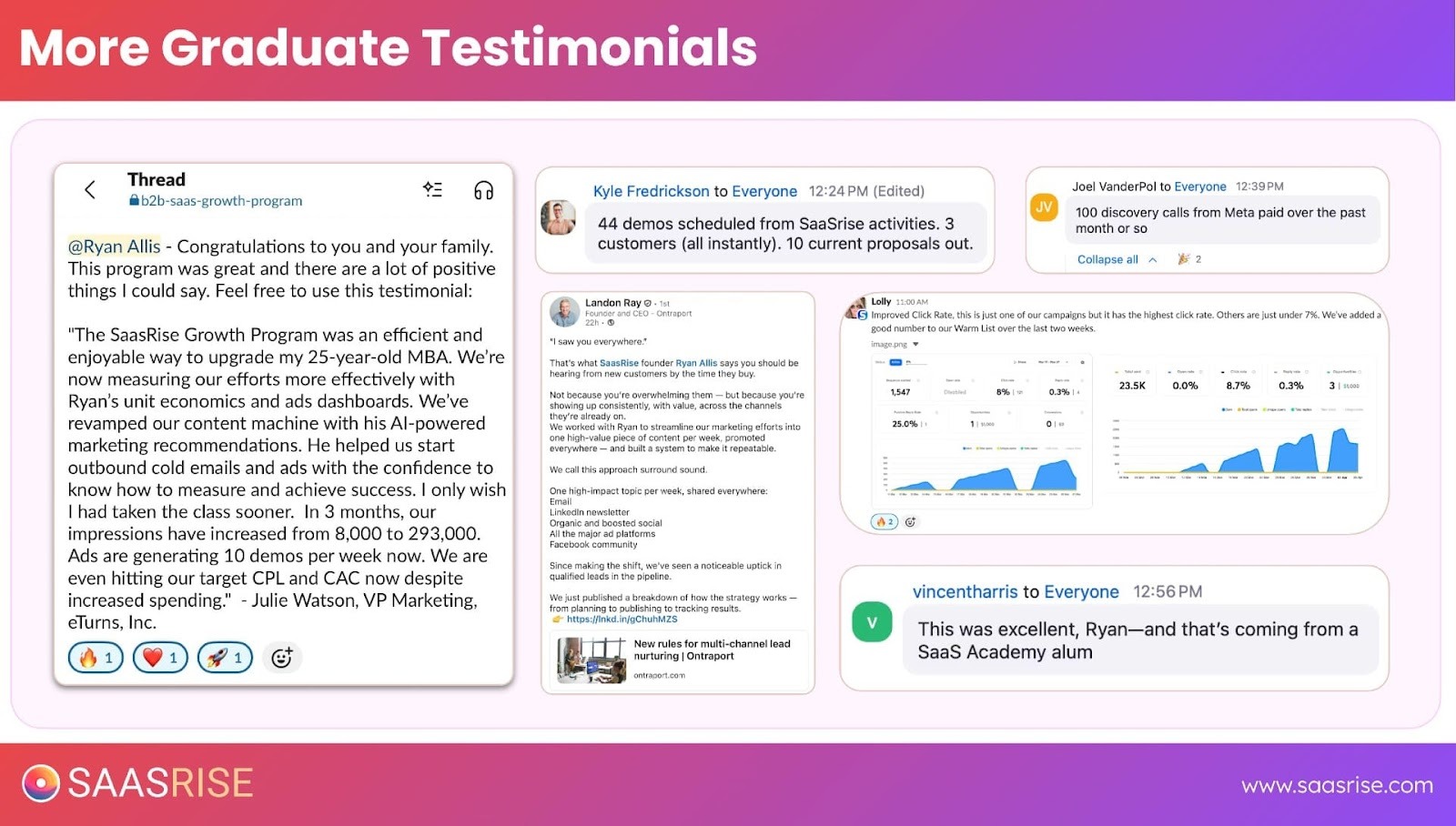
Over the last two years, we’ve helped B2B SaaS companies like Instantly, Clearstream, RNL, RXNT, GetResponse, Convoso, YouCanBookMe, Ontraport, Tatango, and others scale revenue by implementing a consistent system for customer acquisition.
The pattern is pretty simple: most SaaS teams are not “missing a channel.” They’re missing coordination.
They’ll run ads, do some outbound, publish content when they can, and hire SDRs to follow up. But each of those efforts lives in its own little box. The buyer doesn’t experience it that way. The buyer experiences your brand as a sequence of impressions over time, across platforms, usually before they ever raise their hand.
When your growth efforts are disconnected, you get the same symptoms over and over:
- Ads targeting too broadly because nobody built a real market list
- Outbound that feels cold because there’s no brand familiarity around it
- Content that gets created but not distributed systematically
- Unclear CPL and CAC by channel, so scaling becomes guesswork
That’s the gap the “B2B SaaS Growth System” is designed to solve.
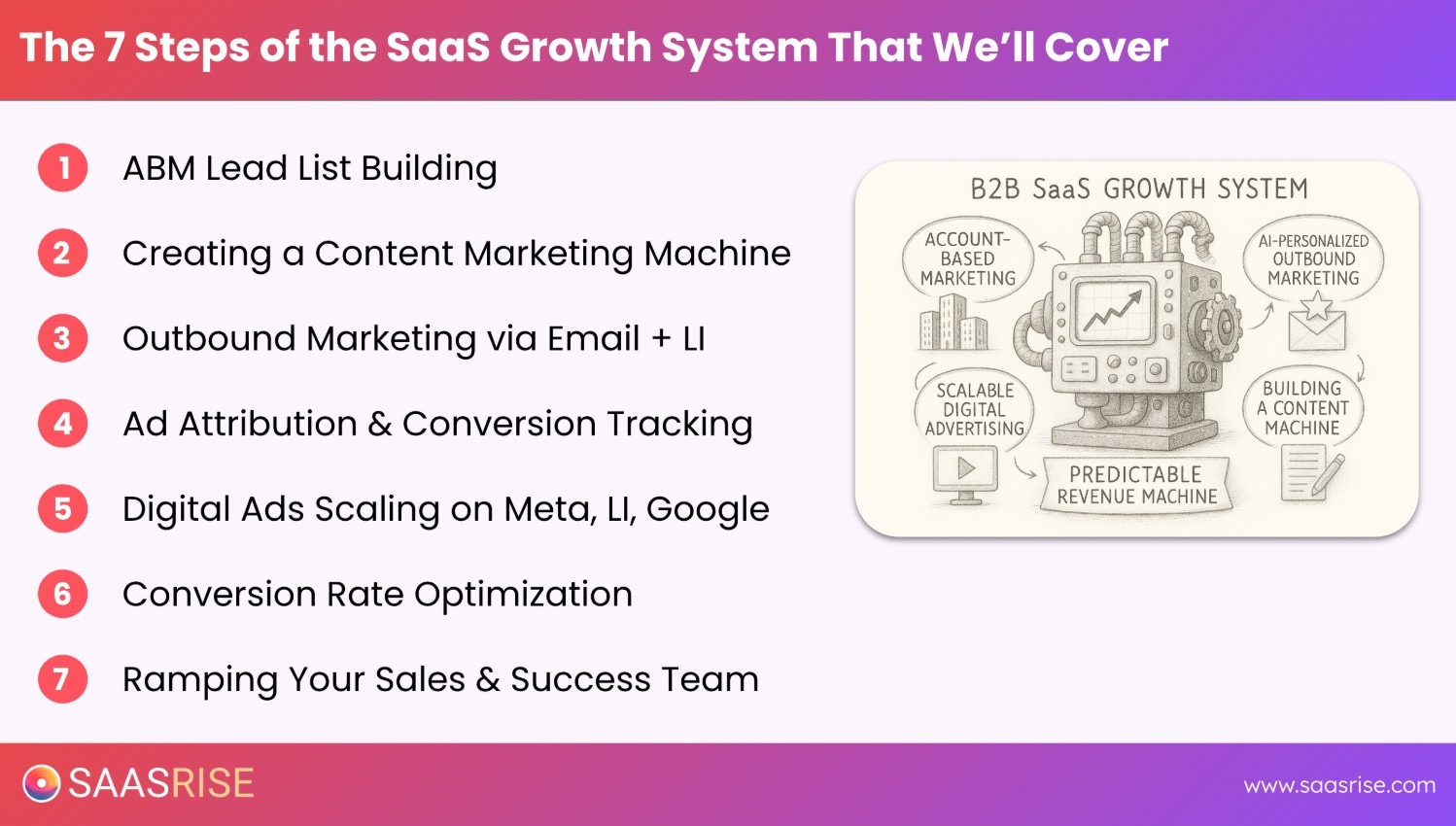
Step 1: Build a Comprehensive ABM List of Your Market
Everything starts with market definition. You build a complete ABM lead list of your TAM, meaning you know exactly who you’re trying to reach before you spend money or send messages.
Practically, that list-building process often pulls from tools like:
- Apollo
- Instantly
- ListKit
- LinkedIn Sales Navigator
Once you have this, every other channel becomes easier because you’re no longer guessing. You’re executing against a known set of accounts and decision-makers.
Step 2: Create Omnipresence With a Real Content Machine
One of the biggest wins I’ve seen is when founders stop treating content as “nice to have” and start treating it as distribution infrastructure.
The goal is simple: drive sustained impressions inside your TAM so your brand feels familiar before prospects ever click an ad or open an email.
That omnipresence comes from coordinated distribution across:
- Ads
- Web
When those channels reinforce each other, your outbound doesn’t feel like a stranger interrupting someone’s day. It feels like a continuation of a conversation they’ve already been seeing.
Step 3: Launch AI-Personalized Outbound Email to the ABM List
Outbound still works, but generic outbound is getting punished. The system described in the newsletter uses AI personalization so each message is customized using details from the prospect’s LinkedIn profile and website, often using Clay and Instantly.
The point isn’t to sound clever. It’s to be relevant at scale, and to create engagement signals you can use everywhere else.
Step 4: Add LinkedIn Outbound to the Same People
Email alone is not the whole game. The system layers LinkedIn outreach to the same ABM audience, with automated follow-up directed at people interacting with outbound emails.
That matters because buyers don’t live in one channel. They bounce around. Your job is to show up consistently in the places they already pay attention.
Step 5: Scale Profitable Digital Ads in a Specific Order
The ads component here is not “run LinkedIn and hope.” It’s a structured build:
Matched audiences and retargeting first, then search, lookalikes, and thought leader ads to expand volume while staying efficient.
The key discipline is economics: the newsletter calls out targeting payback that’s under 50% of ACV when scaling profitable ad campaigns.
Step 6: Calculate CPL and CAC by Channel, Not by Vibes
If you can’t see CPL and CAC per channel and ad type, you’ll scale the wrong thing. The system emphasizes third-party tracking (the newsletter mentions Cometly) so you can understand what’s actually driving pipeline.
Once you have clean numbers, you can do the most important thing in growth: allocate budget to what’s working and stop debating it endlessly in meetings.
Step 7: Build the SDR and AE Follow-Up Engine
None of this matters if the leads don’t get worked fast and well. The final step is building out SDR and AE follow-up capacity so pipeline turns into revenue, and revenue turns into a predictable machine.
In practice, you’re building a system where:
- Marketing creates consistent engagement across the market
- Sales follows up with speed and structure
- You can scale spend because you can measure payback confidently
What This Looks Like When It’s Working
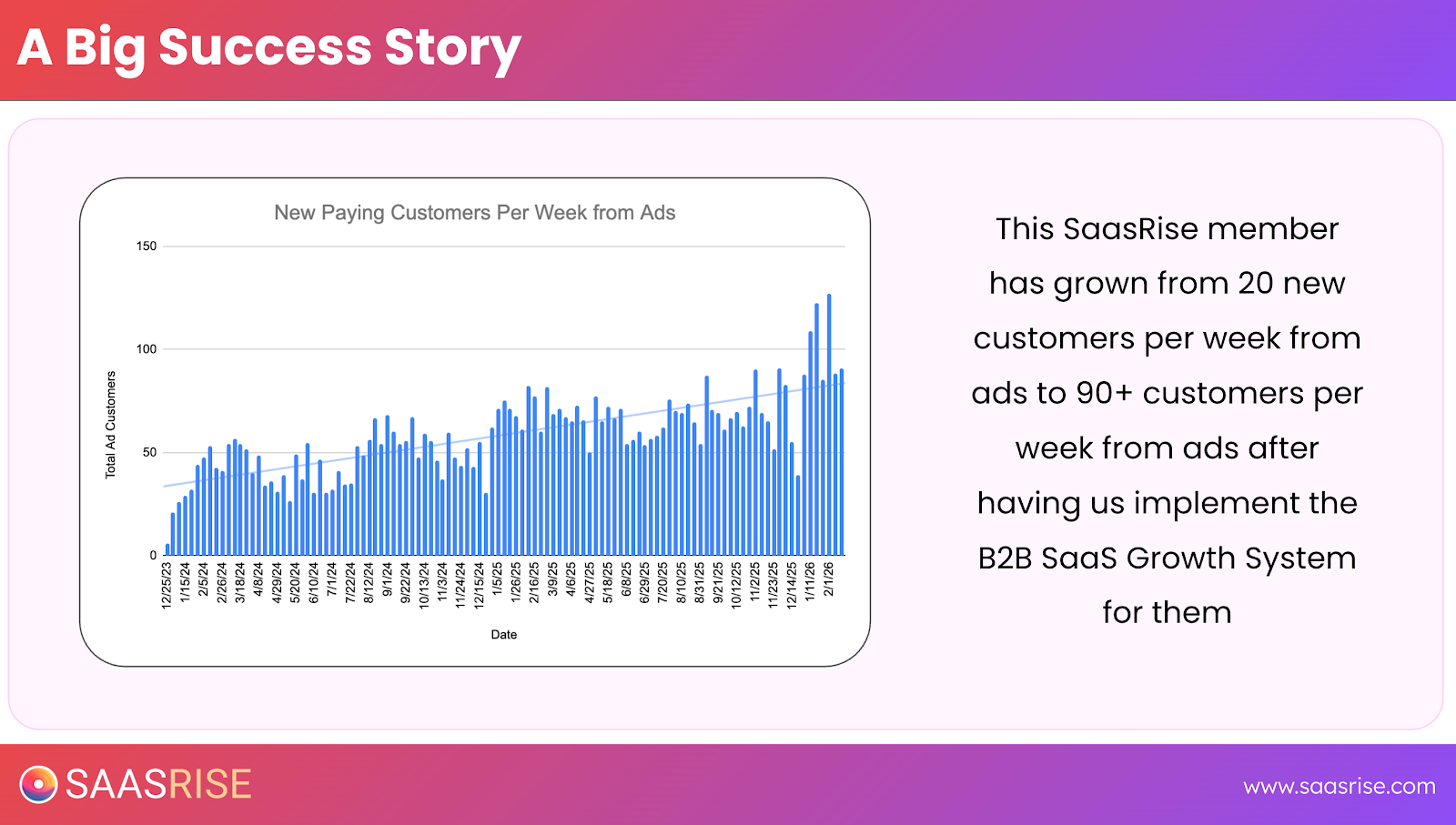
The promise of the system isn’t that every channel magically performs on its own. The promise is that they compound.
Outbound warms the audience for ads.
Ads create familiarity that lifts outbound response.
Content makes your brand feel legitimate.
Tracking tells you where to scale.
Sales turns attention into revenue.
That’s how you get out of the random-growth trap and into something repeatable.