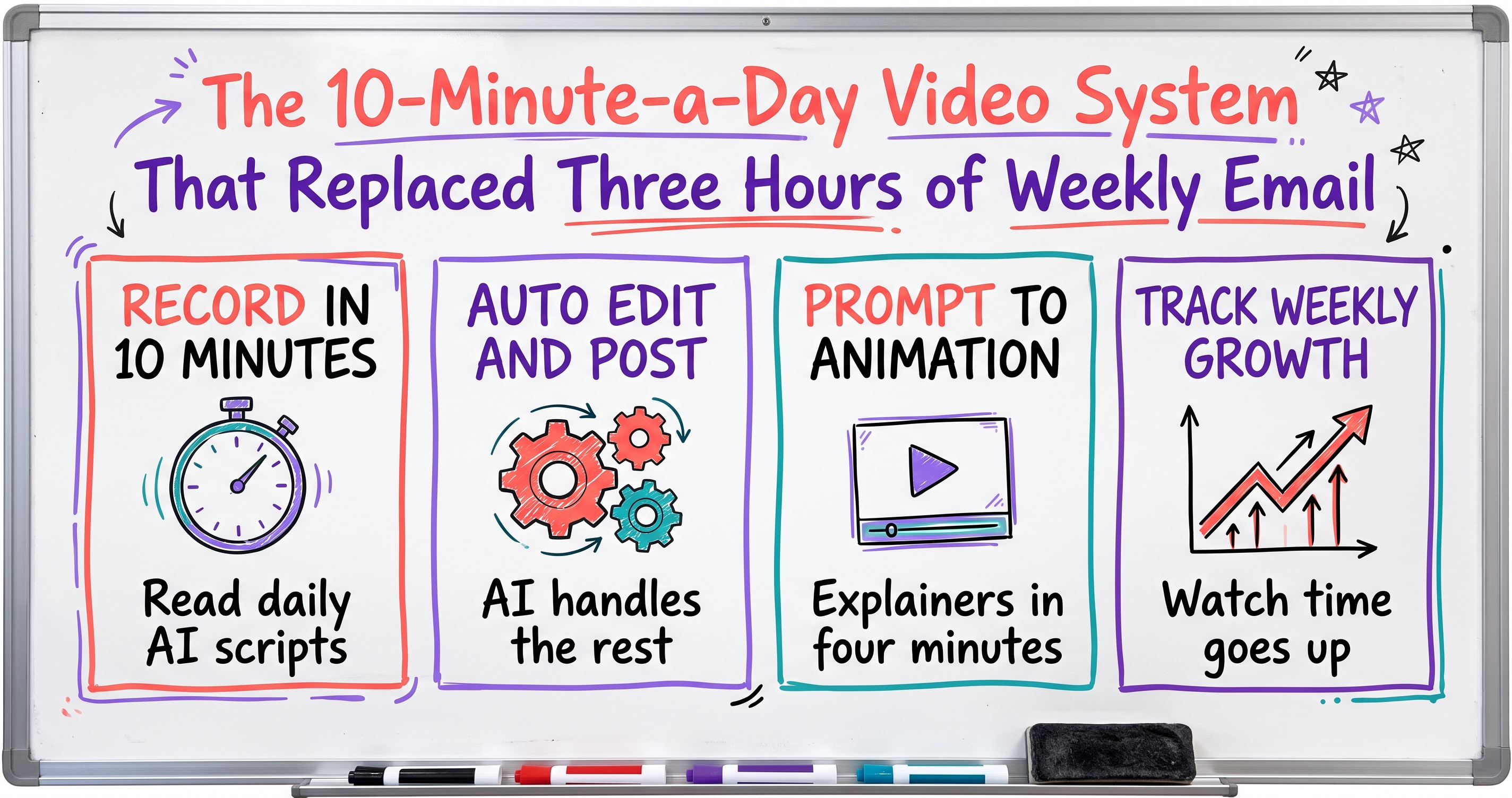
The 10-Minute-a-Day Video System That Replaced Three Hours of Weekly Email
A founder's guide to B2B video that actually gets watched: a daily recording routine, AI editing at about two dollars a video, automatic distribution, and the numbers that came from it in a few weeks.

A founder in our mastermind asked a question that I suspect many of you share. What kind of video works best in B2B for getting a first meeting, and how long should it be? He has a product that customers swear by, a handful of live customers who love it, and a problem getting attention for it. He also pointed out something true: it is hard to make a really good video with real people in it, and buyers already feel overloaded with AI-generated content.
I answered with what we have built over the last month, because it changed how I think about the question. I used to spend three hours every Monday writing emails. Now I spend about ten minutes a day recording a video, and the system edits it and distributes it for me. This post walks through how it works, what it costs, and what has come out of it so far.
Start by deciding where the video will live
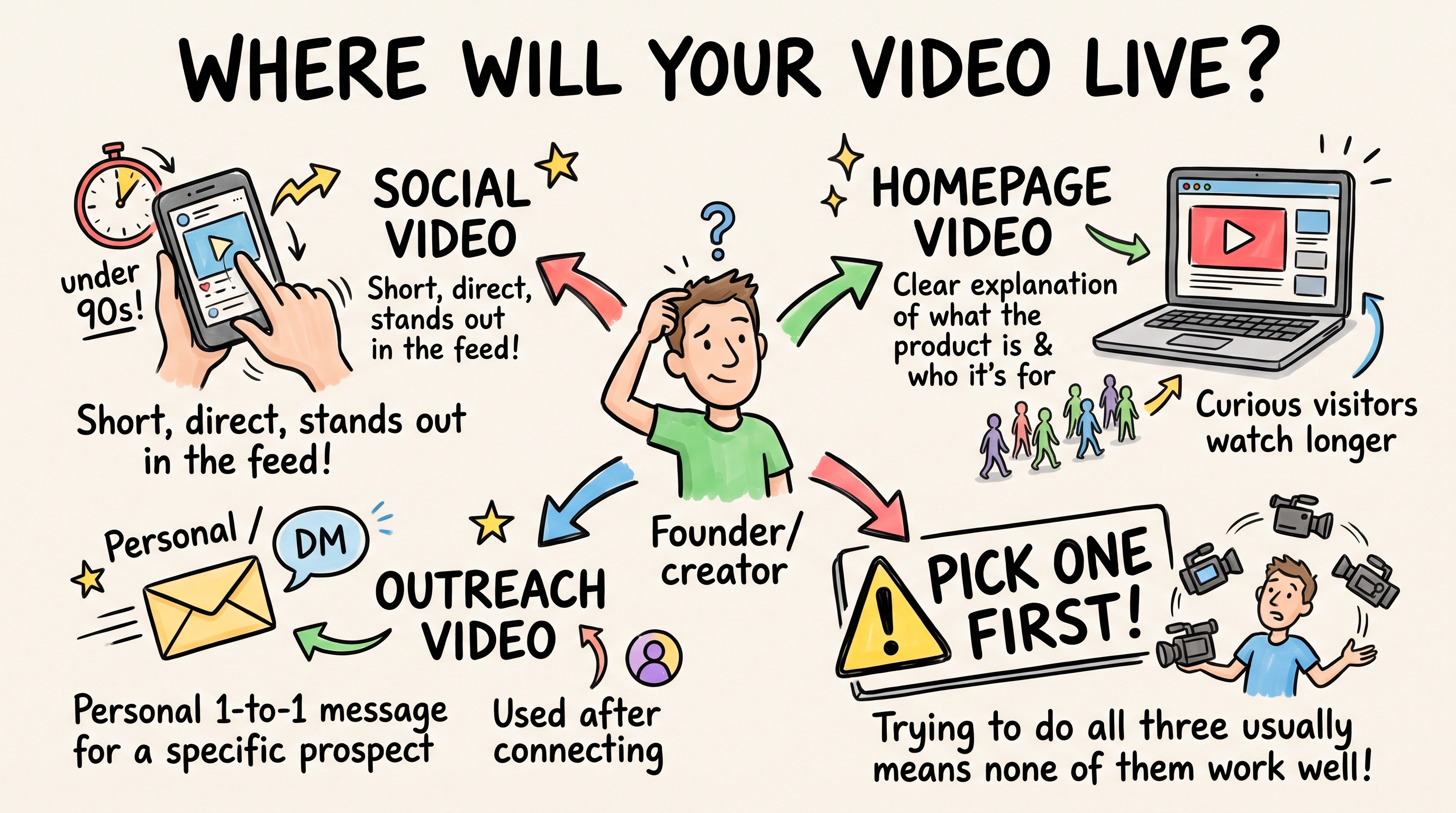
Before I gave any advice, I asked the founder a clarifying question, because the answer depends on where the video will be seen. A video on social media, a video on a homepage, and a video sent in an outreach message all do different jobs. He told me he wanted it on his website and on LinkedIn, on the company page and his own profile. That tells me the video has two audiences. People who find him on LinkedIn are scrolling and need something short that earns their attention in seconds. People who land on his website are already curious and will watch longer if the video answers a real question.
- Social video. Short, direct, and built to stand out in a feed, usually under ninety seconds.
- Homepage video. A clear explanation of what the product does and who it is for, since visitors are already interested.
- Outreach video. A personal message for a specific prospect, used after they have connected with you.
- Pick one first. Trying to serve all three at once usually produces videos that do none of them well.
For his case, the LinkedIn side comes down to short, regular posts from the founder's own profile, and the website side comes down to a clear explainer. The volume matters more than most people expect, which brings me to the system.
The recording studio I built for myself
I built myself a recording studio inside a browser, using AI coding tools, and I spend about ten minutes a day in it. Each day Claude writes a set of scripts for me. I pick the one I want to read and press go, and a teleprompter scrolls the text while I record. I can change the speed and the width of the text, and I can ask for a rewrite if I do not like the script. When I finish, I approve the take and send it to Claude, which edits it in about thirty minutes. The result is a video of sixty to ninety seconds. It costs me around two dollars per video, depending on which model I use. I have installed about thirty animation styles, and the system gets better over time through a loop called recursive self-improvement. Then it distributes the finished video on its own.
- Pick a script. Claude pre-writes the day's script options each morning.
- Record with a teleprompter. Speed, width, and rewrites are all adjustable in the browser.
- Approve and send. The edit happens automatically and takes about thirty minutes.
- Distribute automatically. Videos are scheduled across channels for the coming days without any manual posting.
Distribution runs wider than people assume. The videos go out to Instagram, YouTube, TikTok, Threads, and Facebook on our accounts. They are also posted to our community page, selected ones go to our blog, and each week they are collected into our email newsletter. A founder asked whether email was part of it, and it is, as a weekly collection and not a daily send. The point of all that automation is that I only need to do the one part that has to be me.
What the numbers look like after a few weeks
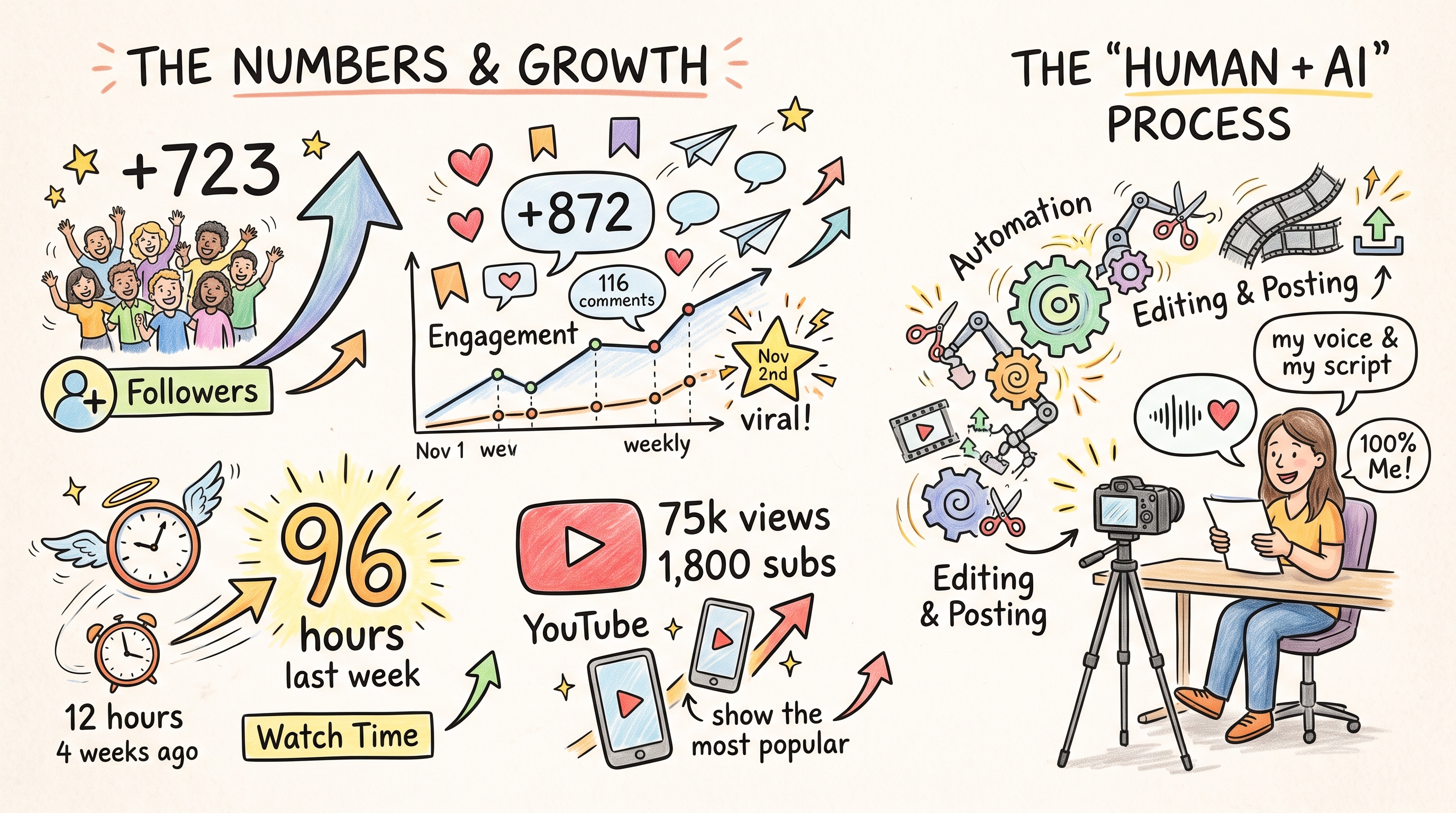
We have only been running this system for four or five weeks, so I would treat the numbers as early signals and not as proof of a lasting trend. Still, they have moved in the right direction every week. Last week we added 723 new followers, and our content collected 872 likes, saves, comments, and shares. We are getting about 116 comments per week, which is small, but it is growing. Our videos had 96 hours of watch time last week, up from 12 hours four weeks earlier. We had one viral post in the week of November second, and each completed week since has delivered more views than the one before. Our new YouTube channel has reached about 75,000 views and about 1,800 subscribers, and the vertical short videos are getting the most views.
- Followers. 723 new followers in a single week.
- Engagement. 872 likes, saves, comments, and shares, with about 116 comments.
- Watch time. 96 hours last week, up from 12 hours four weeks earlier.
- YouTube. About 75,000 views and 1,800 subscribers on a new channel, with vertical shorts leading.
One caution is worth adding. The founder who asked the question worried that buyers are tired of AI-generated content. That concern is fair, and it is the reason this system keeps a real person at the center. Everything in it starts with me reading a script I chose and approved, on camera, in my own voice. The automation handles the editing and the posting, which are the parts nobody enjoys.
The other kind of video: ask Claude to build it
There is a second kind of video that is just as useful and takes even less effort. I no longer open a traditional video editor. I describe what I want to Claude, and with the latest models, it can produce an explainer video, a whiteboard video, or even a claymation video. I showed the group a short example during the call, a basic video that explains what a product is. You used to have to hire a freelancer for around three hundred dollars to animate an explanation of your product. Now you can have it in about four minutes. For a founder with a product that works and a hard time getting noticed, this is the kind of video that fits on a homepage or in a follow-up email after a first conversation.
- Describe the video. Say what the product does, who it is for, and what style you want.
- Pick a format. Explainers, whiteboard animations, and claymation are all possible.
- Iterate in plain language. Ask for changes the same way you would brief a freelancer.
- Use it where visitors need it. Put it on the homepage or send it after a first call.
What used to cost real money and a week of back-and-forth is now an afternoon project, and the quality has crossed the line from novelty to something you can put in front of a buyer.
Where hosted video still fits
We also keep a video hosting account for longer recordings. About once a month we run a webinar, upload the sixty-minute recording, and send it to our email list. The same platform powers the videos embedded on our homepage, and it gives us a lot of tracking data about who watches and for how long. This was our main approach to video until we built the new system a few weeks ago. It remains useful for anything that needs a professional embed without the branding of a public video site, and for any video where you want to know how long people actually watched.
What to take from this
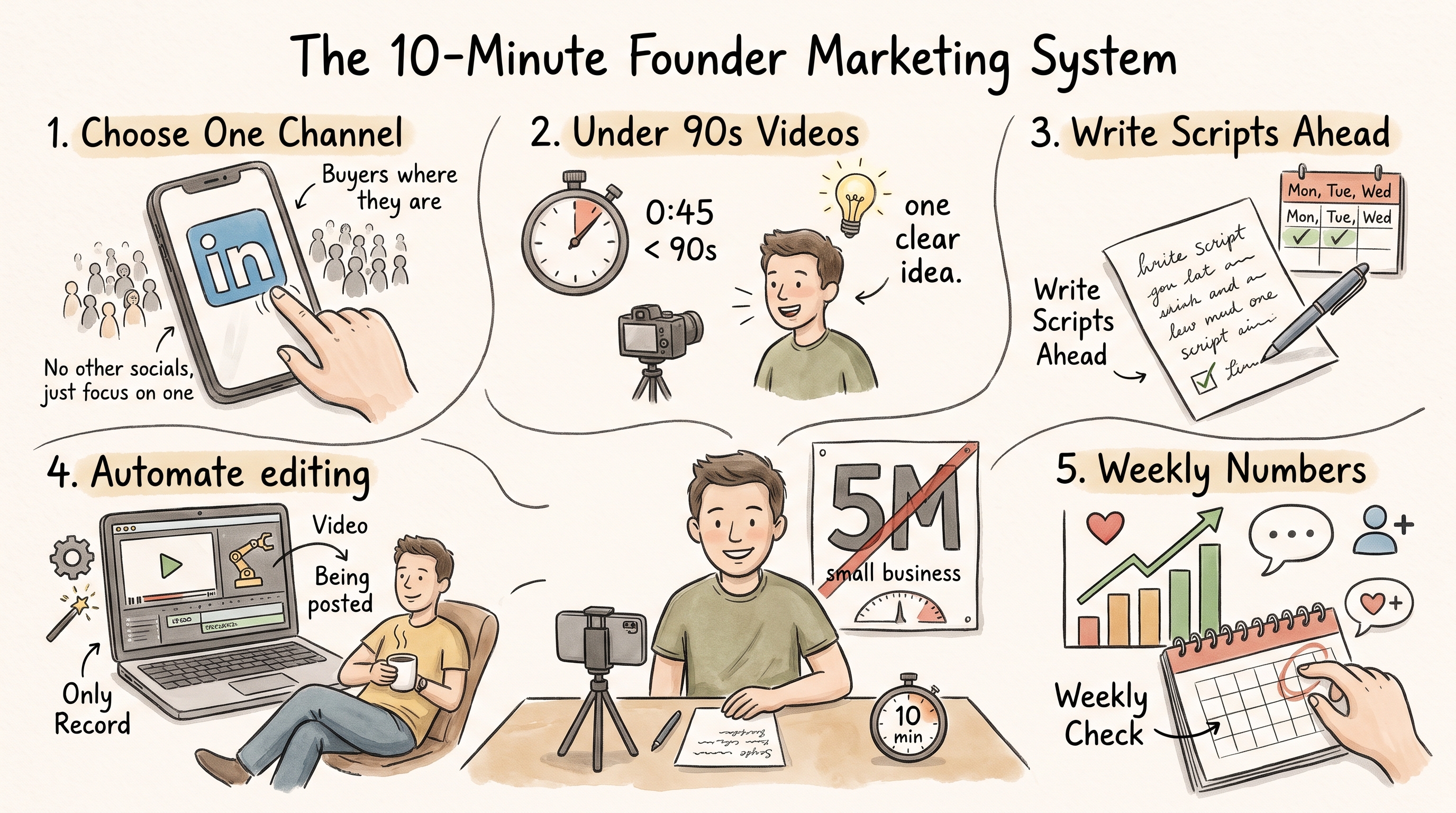
I believe marketing is a critical job for any founder building a company below five million dollars in revenue, and that is why I built a system around it instead of trying to find more hours. The founder who asked the question summed up our approach as a constant weekly flow of fresh, relevant content. That is a fair description, and it applies to a company of any size. Here is how I would start.
- Choose one channel. Start where your buyers already spend time, such as LinkedIn.
- Keep videos under ninety seconds. A single clear idea per video is easier to watch and to produce.
- Write scripts ahead of time. Having the day's script ready removes the biggest barrier to recording.
- Automate the editing and posting. Spend your own time only on the recording.
- Check the numbers weekly. Followers, watch time, and comments tell you quickly what is working.
You do not need to build a studio like mine to begin. You need a script, a camera, and ten minutes. The system around it can come later, once you know what your audience wants to watch.