
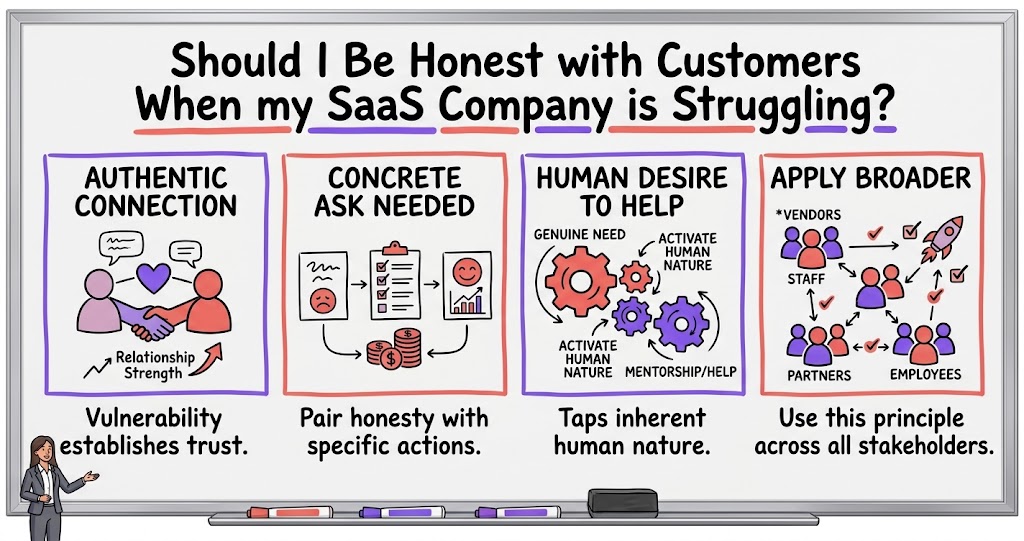
Should I Be Honest with Customers When my SaaS Company is Struggling?
A founder's near-bankruptcy story about admitting real trouble to a major customer, and why the honest ask usually gets a better response than the confident performance most founders default to.

This question doesn't come up often in polite founder conversation, mostly because admitting it out loud feels like a risk in itself. If your company is genuinely struggling, cash is tight, growth has stalled, or you're leaning on a customer more than you'd like them to know, how much of that do you actually tell them? The instinct for most founders is to project strength no matter what, on the theory that any crack in the confident exterior will spook the people paying your bills. One story shared in the group, from a founder who's lived through this exact moment more than once, makes a strong case that the instinct is often wrong.
The conversation nobody wants to have
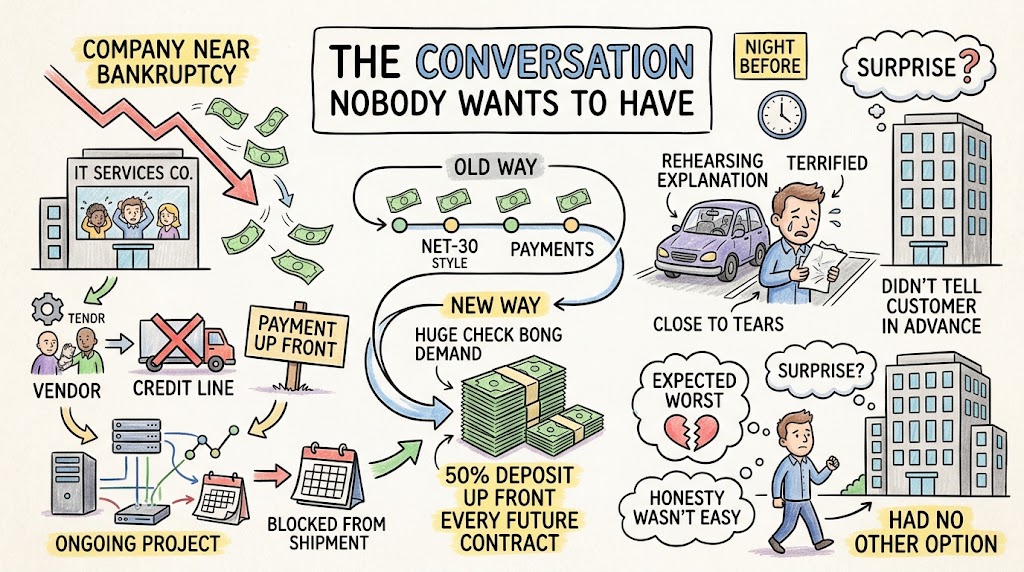
The founder had been running an IT services company that was close to bankruptcy. Vendors had gotten so nervous about the company's credit that nothing could get shipped without payment up front, which meant he had to go to one of his biggest customers and ask for a 50 percent deposit on every future contract, a significant change to how they'd always done business together. He hadn't told the customer in advance what the meeting was about. He just knew he needed to walk out with a check, because there was a project underway and no supplier willing to extend credit to get the materials moving.
He described sitting in the parking lot the night before, terrified, close to tears, rehearsing how he was going to explain where the business actually stood. That's worth sitting with for a second. This wasn't a founder who found honesty easy or natural in the moment. It was someone who fully expected the conversation to end badly, maybe even end the relationship, and went in anyway because he didn't see another option.
What actually happened when he told the truth
The reaction was the opposite of what he'd braced for. Rather than pulling back, the customer became, in his words, a mentor and advisor on the spot. He offered to help however he could, walked the founder over to accounts payable, and had them cut a check that same day. He then revealed something the founder had no way of knowing going in: his own business had been through nearly the exact same situation about eight years earlier, and he understood exactly what it felt like to be on the other side of that conversation.
- Vulnerability, not confidence, was what created connection. The moment the founder stopped performing strength and admitted real need, the relationship shifted from vendor and customer to something closer to two people who'd both been through hard times.
- The customer opened up his own story once trust was established. He shared how his business had gotten through its own near-collapse and introduced the founder to other people who'd struggled and come out the other side.
- Practical help followed immediately. An immediate check, an open offer to advance funds in the future if needed, and a standing invitation to ask for help again rather than hide the next problem.
The founder said that up until that day, he'd operated on the assumption that customers needed to believe the company was on the verge of giant success in order to want to keep doing business with him. After that conversation, he said he was simply too tired of trying to keep up that appearance, and he stopped doing it.
It doesn't work on everyone, and that's worth saying plainly
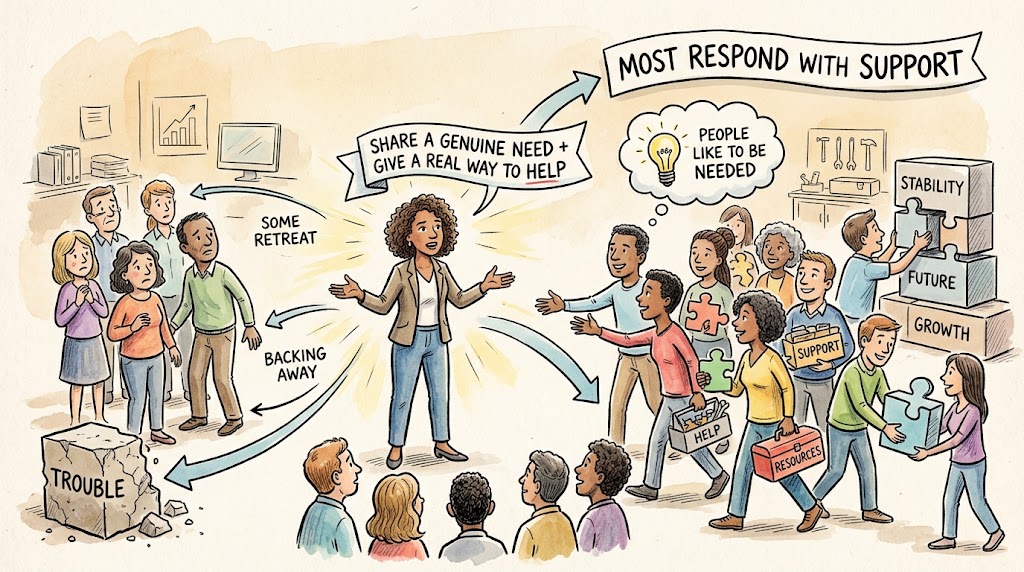
The honest version of this story includes the part that doesn't fit a tidy lesson. Not every customer reacted the way that one did. He was direct that a few people, once they sensed the company was in real trouble, backed away. That's a real risk, and pretending otherwise would be dishonest in its own right. But by and large, most of the people he was honest with responded with support rather than retreat, which was enough of a pattern that he pointed to a specific idea as the reason why: people generally like to be needed, and when you share a genuine need with someone and give them a real way to help, it tends to activate something in most people rather than driving them away.
Why the framing matters as much as the honesty itself
There's a version of honesty that reads as panic, and a version that reads as a real ask from someone who still believes in the business. The difference isn't in how much you disclose, it's in how you disclose it. This lines up with a related point raised elsewhere in the same conversation, about how much emotion to show your own team during hard times: the founders who navigate it well tend to pair honesty about the difficulty with a clear sense that they still believe things will work out, and they give the other person something concrete to do with the information rather than just handing over the weight of it.
- Lead with the specific need, not just the difficulty. "I need a 50 percent deposit going forward because of X" gives someone a concrete way to respond. A vague admission that things are hard invites worry without a path to help.
- Don't wait until the last possible moment. Part of what made this conversation land well was that it happened directly and in person, not through an evasive email or a surprise change buried in a contract renewal.
- Expect a range of reactions, and don't let one bad one define the approach. Some relationships will cool. The pattern across enough of these conversations is that most people respond better than founders fear, not that everyone will.
- Being honest about the ask is different from being honest about every fear you have. You don't owe a customer a full accounting of your internal anxiety. You owe them clarity about what's actually changing and why.
The same principle applies to who else you tell
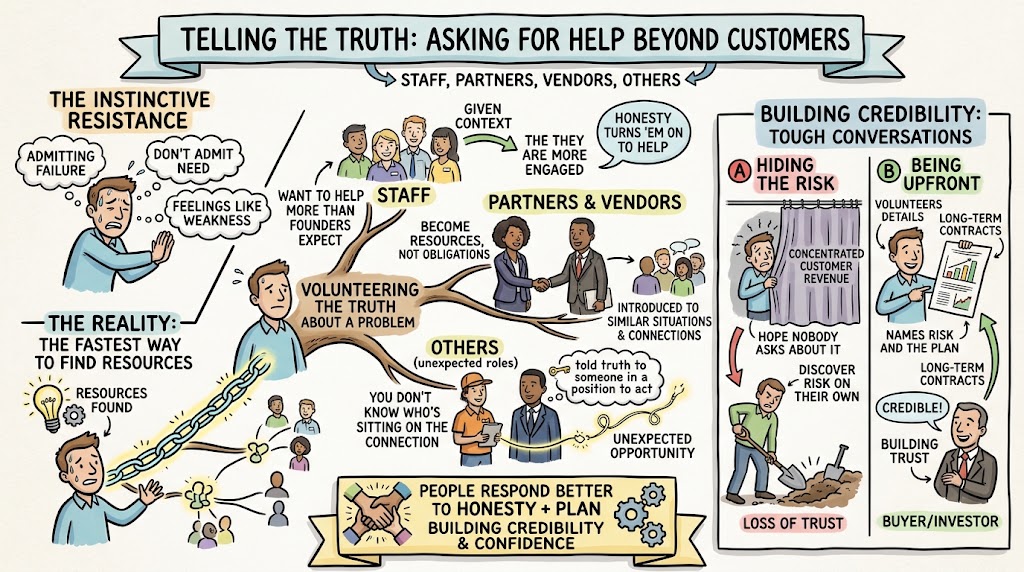
The founder didn't stop at the one customer conversation. His broader point to the group was that telling people who can actually help you that you need help tends to turn something on in human nature, and that this applies well beyond your biggest customer. He described it as something a lot of founders resist instinctively, because asking for help can feel like admitting failure, when in practice it's often the fastest way to find the connection or resource that gets you through a hard stretch.
- Staff often want to help more than founders expect. People who are already invested in the company's success tend to respond to honesty about a real problem, not run from it, especially if they've been given context along the way.
- Partners and vendors can become resources, not just obligations. The same customer who agreed to a deposit later became someone who introduced the founder to other people who had weathered similar situations.
- You don't know who's sitting on the connection you need. A single honest conversation can lead somewhere you couldn't have planned for, simply because you told the truth to someone in a position to act on it.
This mirrors a pattern that shows up elsewhere in how founders talk about tough conversations, whether it's with a customer, an investor, or a potential buyer. Being upfront about a real risk, rather than hoping nobody asks about it, tends to build more credibility than it costs. A founder dealing with concentrated customer revenue during an acquisition conversation, for instance, found that volunteering the details of long-term contracts before a buyer went digging changed the entire tone of the discussion. The common thread is the same one from the customer story: people, whether they're a customer, an employee, or a buyer, generally respond better to a founder who names the risk and the plan than to one who lets them discover the risk on their own.
The bigger shift this points to
What makes this story worth remembering isn't just that one conversation went well. It's the reframing that came out of it. The founder had spent years assuming that projecting strength was the price of keeping customers, and what he found instead was that admitting a real need, paired with clarity about what would help, deepened a relationship rather than damaging it. There's a reference he made to an old idea, the one from How to Win Friends and Influence People, that people love to be needed. It's an old idea, but it holds up: when you're honest about pain and give someone a specific way to help, you're not asking them to rescue you out of pity. You're giving them a chance to be part of getting the story to a better ending, and most people, it turns out, want to take it.
If you're sitting on a version of this conversation right now, the story doesn't guarantee it will go well. But it's a strong argument against the instinct to keep performing confidence indefinitely. The customers who matter most to your business are often the ones with the most reason to want to see you succeed, and being honest with them about what you actually need is frequently the thing that lets them show it.