Nobody Adopts AI Because You Told Them To
Engineering teams pick up AI tools on their own, but sales and marketing teams often stall at copy-and-paste. A group of SaaS founders explains what actually gets go-to-market teams using AI: visible wins, internal champions, and leaders who show the work.

A CTO in our mastermind described a gap that many founders will recognize. His engineering team has folded AI into how it writes code. Skills get written and shared, and people respond with relief because the tools save them time the same day. His go-to-market team, on the other hand, mostly copy-and-pastes questions into a chatbot, the way people did two or three years ago. He asked the group how others have gotten sales and marketing teams to use AI in a serious way, and how they train people to do it.
He also told us what some of his mentors had said: if you have to convince your go-to-market team to try these tools, you have the wrong people. He was not sure he agreed. The conversation that followed was one of the more practical ones we have had this year, and the shared conclusion was that mandates do not work, but examples do.
Why engineering adopts and sales stalls
Part of the gap is about tools and technical comfort. Engineers already live in editors and command lines, and dropping a markdown file full of instructions into a project feels natural to them. People have been doing that for over a year. On the marketing and sales side, the same move still feels new. A rep who has spent years working in a CRM and an inbox is being asked to learn a different way of working, without an obvious reason why, and usually while carrying a quota.
Another member said her CTO raises the same problem in every weekly check-in, which is that the team is behind on AI while he is far out ahead, building things for the company all day long. The rest of the team is not catching up. She noted that the company has a channel meant for sharing AI tips, and nobody posts in it because everyone is too embarrassed to show what they have made. That detail says a lot about how adoption actually feels from the inside.
- Different starting points. Engineers already work in tools where AI fits naturally. Sales teams have to change habits before they see a benefit.
- The payoff is slow to see. As the CTO put it, he can show an engineer a time saving today, but a salesperson measures results against a quarter or a full sales cycle.
- Social risk is real. Sharing half-finished AI work in a public channel feels exposed, so people stay quiet even when they have found something useful.
None of this means the go-to-market team is resistant. It means the conditions that made adoption easy for engineering do not exist for them yet, and somebody has to build those conditions.
Leadership by example is the only thing that lands
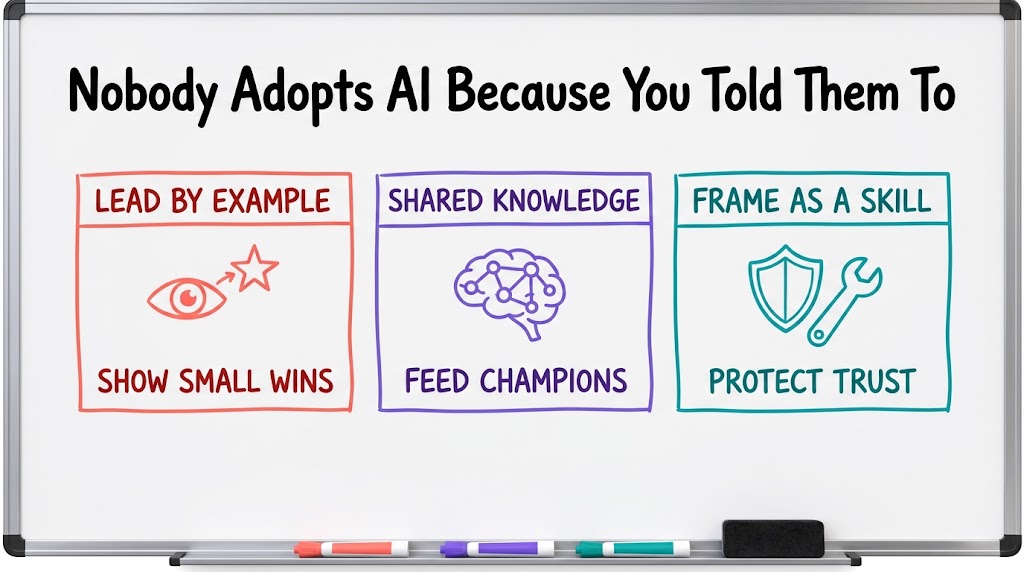
The clearest answer of the call came from a founder who said that outside of engineering, the only way people in his company start using these tools creatively is when someone leads by example. Telling them over and over that they have to do it, or they will fall behind, does not land. Showing them what it does does. He gave two examples. In the first, he built a one-pager that a salesperson can send to a prospect, using a chatbot and some source material, and it replaced roughly three hours of work. In the second, he pushed one of his account executives to build a prototype of the product inside a specific customer's environment, to show how a new feature would look on their site. The customer success team saw that and started doing the same thing with their own customers.
- Start with a specific, small win. A one-pager, a demo environment, or a follow-up email draft is easy to understand and easy to copy.
- Make it useful to the viewer. People adopt a tool when they see that it removes a task they already dislike doing.
- Let one person go first. It was a single account executive's prototype that the customer success team picked up, without anyone being told to.
This matches what I see in my own work. Teams copy what their peers visibly succeed at far more than they follow an instruction from leadership. A five-minute demo that shows a real deliverable, made with the team's own content, will do more than a training session on the theory of AI.
Champions emerge, and you can feed them
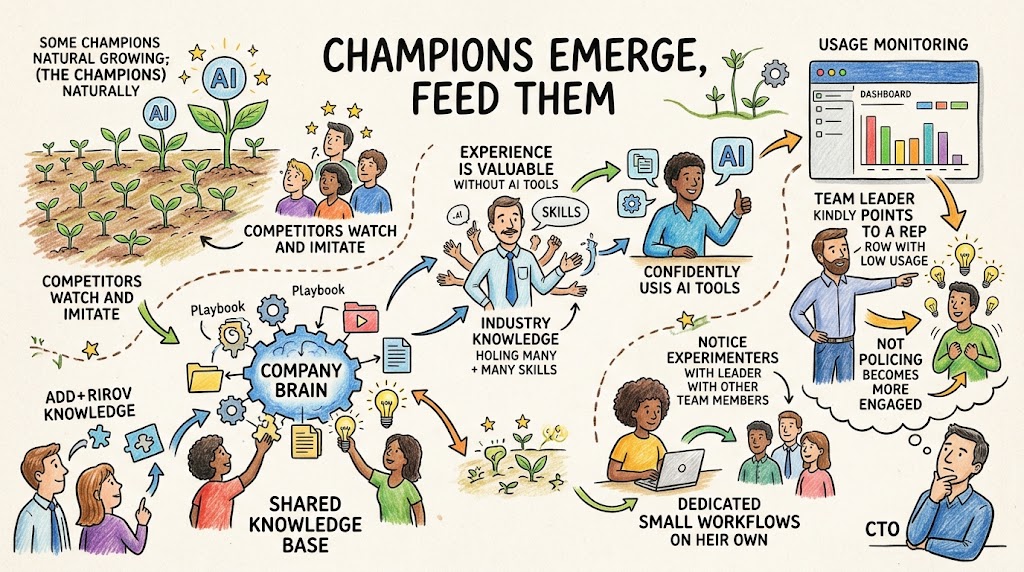
A second founder disagreed, politely, with the mentors who told the CTO that his reps should all be AI enthusiasts. He said the champions in his company were not created, they emerged naturally, and then the other team members watched what they were doing. Since everyone on a sales team is competitive, people picked it up. What gave those champions staying power was a shared knowledge base, a kind of company brain, that everyone builds on. When a rep builds something, the next rep starts from there.
He also told a story about a recent hire. The company added an experienced salesperson from their industry who is not an AI enthusiast at all, and who is excited to be learning these tools, in part because he has the shared brain behind him from his first day. The CTO ended the conversation leaning toward the view that champions come from within.
- Do not require enthusiasm at hiring. Experienced reps who know the industry can pick up the tools quickly when the environment supports them.
- Build a shared knowledge base. Notes, call summaries, playbooks, and templates in one place give every rep something to start from and every champion something to add to.
- Notice who is already experimenting. The people building small workflows on their own are the ones to pair with the rest of the team.
Usage monitoring helped another member. He checks how his team is using AI, and after seeing a couple of people who were barely touching it, he had direct conversations. Those people changed their behavior. The point was less about policing and more about noticing who needed a push and giving it kindly.
Picking the workflow worth automating
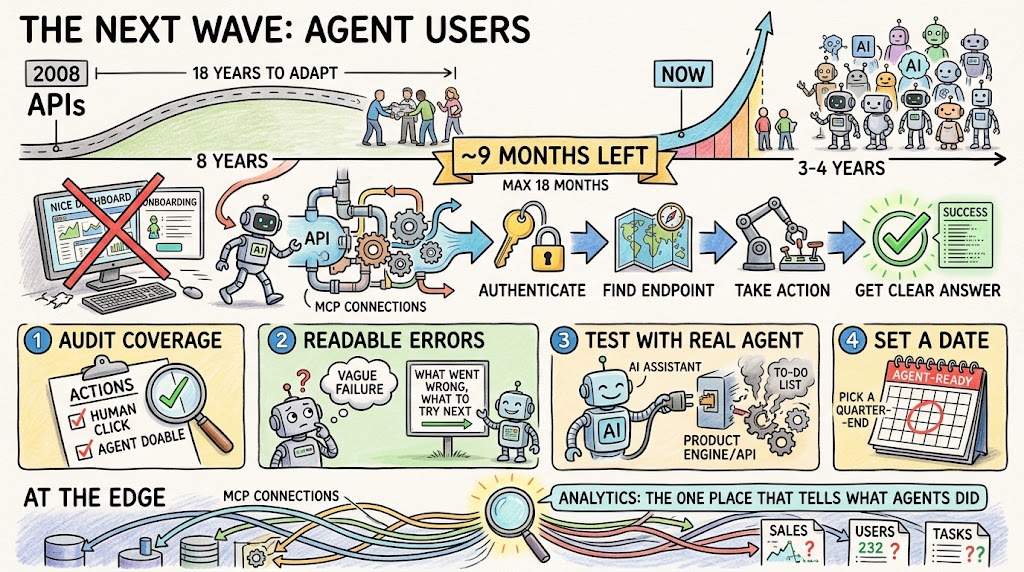
The CTO's underlying question was about which go-to-market work to hand to an AI agent. His team sells into large organizations with many stakeholders, so the valuable work is account mapping: working out who is in the buying group, who to bring into the conversation, and when to follow up. He imagines an agent for every deal in the pipeline that does this mapping, pulls in signals from sources like LinkedIn, and tells the rep who to contact and when.
I told him what I have found. There are plenty of tools that automate outbound emails and LinkedIn outreach. The more interesting category is the newer generation of AI-native CRMs that do what he described: they map the organization, remind you when you have not followed up in thirty days, read your emails and Slack messages, record your calls, and bring that context into every account. We are in the middle of moving our own CRM over to one of these tools, and I will report back on how it goes.
- Pick one painful workflow. Account mapping, follow-up reminders, and call notes are all tedious and all easy to measure.
- Consider layering before migrating. The CTO pointed out that moving off an established CRM is a big project and hard to rally a team behind. A trial of a newer tool, combined with an MCP connection to the existing CRM, can test the idea without a full migration.
- Be specific with the AI. A marketer in the group noted that people often try to automate everything at once, and that is what makes the results disappointing. Narrow questions get better answers.
One more success story reinforced the point. A founder described connecting his AI assistant to several scattered data sources through an MCP connection. After a frustrating stretch with an in-house reporting effort that did not deliver what he wanted, everyone with a question in the business suddenly had access to something like a data scientist. He told the group to go connect their assistants to their data. It is the same pattern again: one person shows what is possible and the rest of the company follows.
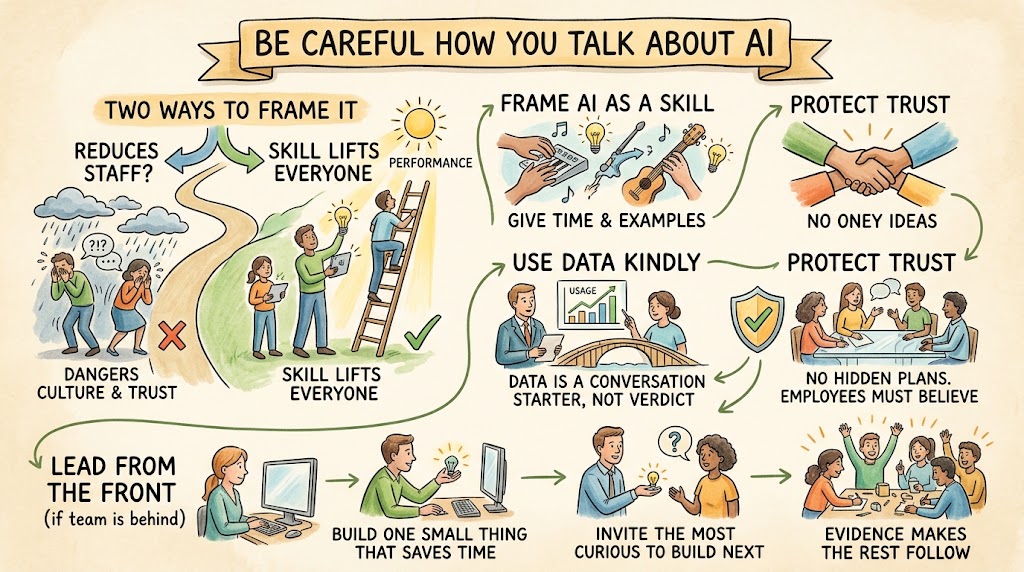
Be careful how you talk about it
The call ended on a subtle issue. One CEO said he is wary of talking about AI efficiency with his team, because he spent the past year working to get his developers on board. About half of them welcomed it and about half did not. His message has been that AI lifts the best players and makes everyone more efficient. If he starts to suggest that it reduces the need for staff, he worries it will damage the culture he has built.
Another member offered a different way to put it. The message is not that AI will take your job. The message is that people who are not using it are the ones who will fall behind. A third founder said he has had this exact conversation with team members, saying that the usage data showed some people were doing it well and others barely at all, and that after the talk the second group corrected course.
- Frame AI as a skill. Tell people that the people who build these skills will do better, and then give them time and examples to build them.
- Use data kindly. Usage numbers are a starting point for a conversation, not a verdict.
- Protect trust. If staff believe AI is a disguised headcount plan, they will hide what they know and stop sharing what they find.
If you lead a company and your go-to-market team is behind on AI, start by doing the work yourself in front of them. Build one small thing that saves someone real time, show it, and invite the person who is most curious to build the next one. The rest of the team will follow, because the evidence is right there in front of them.