
.png)
How to Combine ABM Matched Audience Ads With Outbound Email + LinkedIn to Achieve Brand Omnipresence
One of the biggest challenges in modern B2B growth is staying visible long enough—and often enough—for your ideal customers to remember you. Cold email may get the first touch. LinkedIn might get the second. But without sustained visibility, most prospects forget you before they ever reach a buying discussion. This is where ABM matched audience ads become the missing link.

When combined with outbound email and LinkedIn outreach, matched audience ads create something extremely powerful: brand omnipresence. Your prospects begin seeing you everywhere— in their inbox, in their LinkedIn notifications, in their social feeds, and across the sites they browse. And because the audience is so precisely defined, every impression is useful.
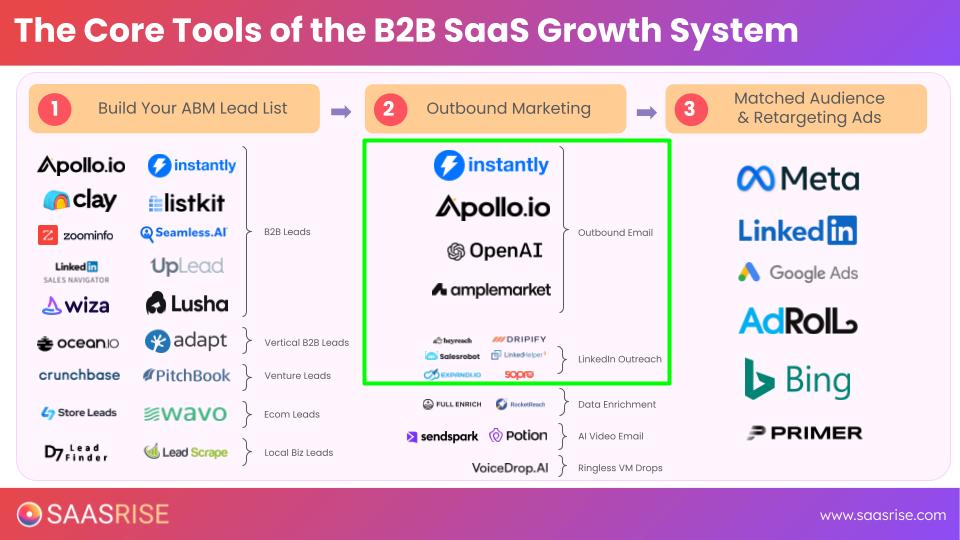
This guide explains how to combine these three channels into one cohesive system that keeps your brand in front of the right accounts every single day.
The Problem With Single-Channel Outbound
Cold email alone can generate clicks and replies, but the moment someone leaves your inbox, the connection often fades. People are busy. They forget quickly. And most are not ready to reply the first time they hear from you.
LinkedIn helps strengthen that connection, but only to a degree. Your posts may not appear in their feed. Your message may go unread. And your profile may only be viewed once.
Matched audience ads fill in the gaps by extending your presence into a channel your prospects use constantly.
When you combine all three, your brand begins appearing:
- In their email inbox
- In their LinkedIn inbox
- In their LinkedIn feed
- Across Meta properties
- Across Google and YouTube
- Across display networks
Suddenly, you become the brand they recognize instinctively—even if they don’t fully know you yet.
That familiarity dramatically increases click-through rates, reply rates, and conversion rates across the entire buyer journey.
What ABM Matched Audience Ads Actually Are
Matched audience ads are a simple but powerful concept.
Instead of advertising to broad demographics, you upload your ABM list into platforms like LinkedIn, Meta, and Google. These platforms then match the individuals (or companies) on your list to their user accounts.
.jpg)
The result is laser-targeted ad delivery: only your priority accounts see your ads.
This is crucial. It means every ad impression is a strategic reinforcement of your outbound motion—not generic brand marketing to random users.
It also means your cold email clickers, your LinkedIn connections, and your website visitors all feed the same unified audience that grows more valuable over time.
How Email, LinkedIn, and Ads Work Together
Outbound email is the starting point. It creates the initial spark: a click, a view, a moment of curiosity. But many prospects don’t reply right away, even if they’re genuinely interested.
LinkedIn provides the second layer. A connection request from someone senior in your company creates a sense of legitimacy. A short message builds rapport. A published post builds authority.
.jpg)
But even then, you might only occupy a small part of their attention.
Matched audience ads complete the system by meeting the prospect everywhere else they go online. They fill the white space between touches. They keep your brand from fading. And they allow you to shape the narrative your prospect sees—daily, passively, and at scale.
When all three channels reinforce each other, the effect compounds:
- Prospects become more familiar with your message
- Your click-through rates rise
- Your email reply rates improve
- Your connection request acceptance jumps
- Your SDRs get warmer conversations
- And your pipeline fills with prospects who already know your brand
This is the foundation of brand omnipresence.
Why This Approach Works So Well
Most marketing efforts rely on a linear path: email → click → landing page → meeting. But real human attention doesn’t follow linear sequences.
People jump between platforms. They evaluate subconsciously. They gather impressions over time. They might click today but not reply for weeks. They might visit your website once and never return on their own.
Brand omnipresence makes sure that no matter where they go next, your brand is there too. It shortens the mental distance between curiosity and trust. It increases the perceived legitimacy of your company. And it raises the likelihood that when a need arises, your name is the first one that comes to mind.
In a competitive market, the companies that win are rarely the ones that communicate the most—they’re the ones that stay visible the longest.
Building the Omnipresence System
The system comes together in three simple layers.
1. Outbound Email Identifies the Right People
Cold email creates the first interaction. It surfaces the clickers—the people who see value, curiosity, or relevance.
These individuals are now high-probability buyers, even if they don’t respond immediately.
2. LinkedIn Makes the Relationship Personal
A connection request from a real person feels human. A short follow-up message continues the dialogue. And now your prospect begins seeing your content in their feed, even without ads.
LinkedIn turns a cold name into a warm relationship.
3. Matched Audience Ads Take Over the Awareness Layer
This is the part that scales.
Your ads continue reinforcing your value proposition. They educate, remind, and elevate your brand. Even if a prospect never replies to your email or accepts your connection request, they’re still being touched weekly—sometimes daily—by your message.
Most buyers are not in-market today, but nearly all will be eventually. When that moment comes, the brand they remember is the one who was present throughout their journey.
What This Looks Like in Practice
A VP of Sales clicks your outbound email but doesn’t reply.
No problem—they now fall into four simultaneous touchpoints:
- HeyReach sends a connection request.
- Your retargeting ads begin appearing on LinkedIn and Meta.
- Your brand shows up across Google’s display network.
- Your next outbound email arrives with increased familiarity.
Even if they don’t respond yet, trust is building quietly in the background.
.jpg)
A week later, your connection request lands. A day after that, your thought leadership post appears in their feed. Three days later, they see a retargeting ad linking to a case study. By the time your SDR reaches out again, the conversation is drastically easier.
This is the real value of omnipresence.
It multiplies the effectiveness of every individual touch.
Final Thoughts
Brand omnipresence is no longer a luxury in B2B—it’s a competitive necessity. Buyers have short attention spans, crowded inboxes, and dozens of vendors vying for their attention.
By combining outbound email, LinkedIn outreach, and ABM matched audience ads, you create a presence that feels inevitable. Not intrusive, not aggressive—simply consistent, relevant, and memorable.
The companies that embrace this multichannel system outperform those that rely on single-channel tactics. They get more clicks. More replies. More meetings. And ultimately, more revenue.
If you want a scalable way to build trust at the earliest stages of your buyer journey, this is the most effective system you can put in place.